SUSS, UOB and SMF Host Global Leadership Symposium 2025 to Shape Future-Ready Leaders for a Changing World
Date: 19 Sep 2025
New study by UOB and SUSS reveals coaching leads to strong gains in business performance, mental well-being and succession planning – offering fresh insights into building resilient, internationally competitive talent
Singapore, 19 September 2025 – The Global Leadership Symposium 2025, co-organised by the Singapore University of Social Sciences (SUSS), leading financial institution UOB, and the Singapore Manufacturing Federation (SMF), returned today for its third edition with the theme “Global-Ready Leadership”. The symposium explored how leaders can navigate complexity with agility and purpose, and create impact on the global stage.
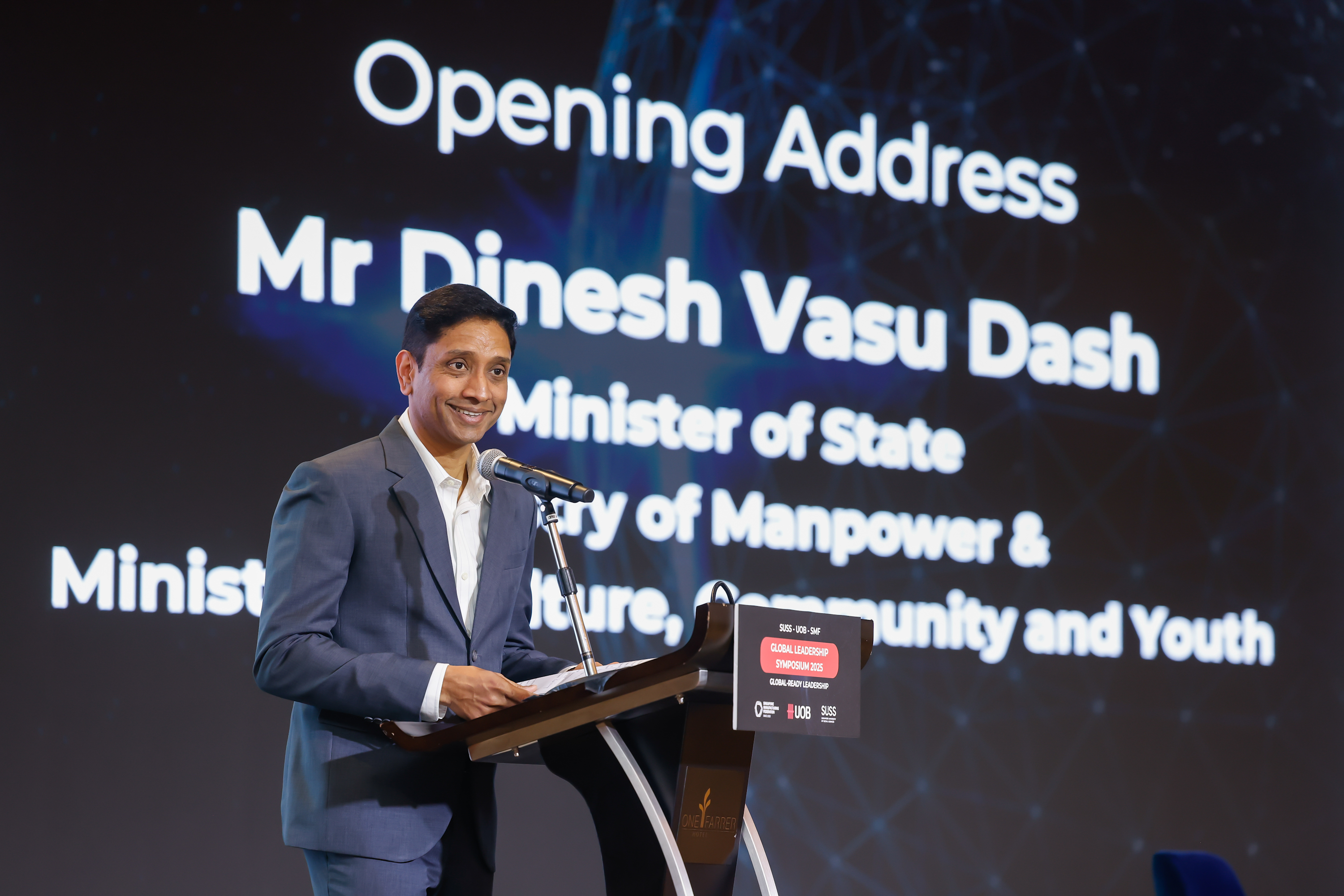
Mr Dinesh Vasu Dash, Minister of State for the Ministry of Manpower and Ministry of Culture, Community and Youth delivered the opening address at the symposium.
Guest-of-Honour Mr Dinesh Vasu Dash, Minister of State for the Ministry of Manpower and Ministry of Culture, Community and Youth, addressed over 300 attendees including business leaders, industry professionals and students at One Farrer Hotel.
The symposium opened with a fireside chat on “Unlocking Global-Ready Leadership: Opportunities and Challenges in Internationalisation”. The discussion explored what it takes for individuals and organisations to be globally ready in today’s volatile and interconnected world, and how more Singaporeans can step out and step up to lead in the global stage. Ms Claire Chiang, Co-Founder & Senior Vice President of Banyan Group, reflected on how leaders must navigate the interplay of geopolitics, technology and work force fragmentation for successful internationalisation of business. She stressed the need for resilience, deep listening across cultures, and clarity of purpose to build trust, foster collaboration and create lasting impact.
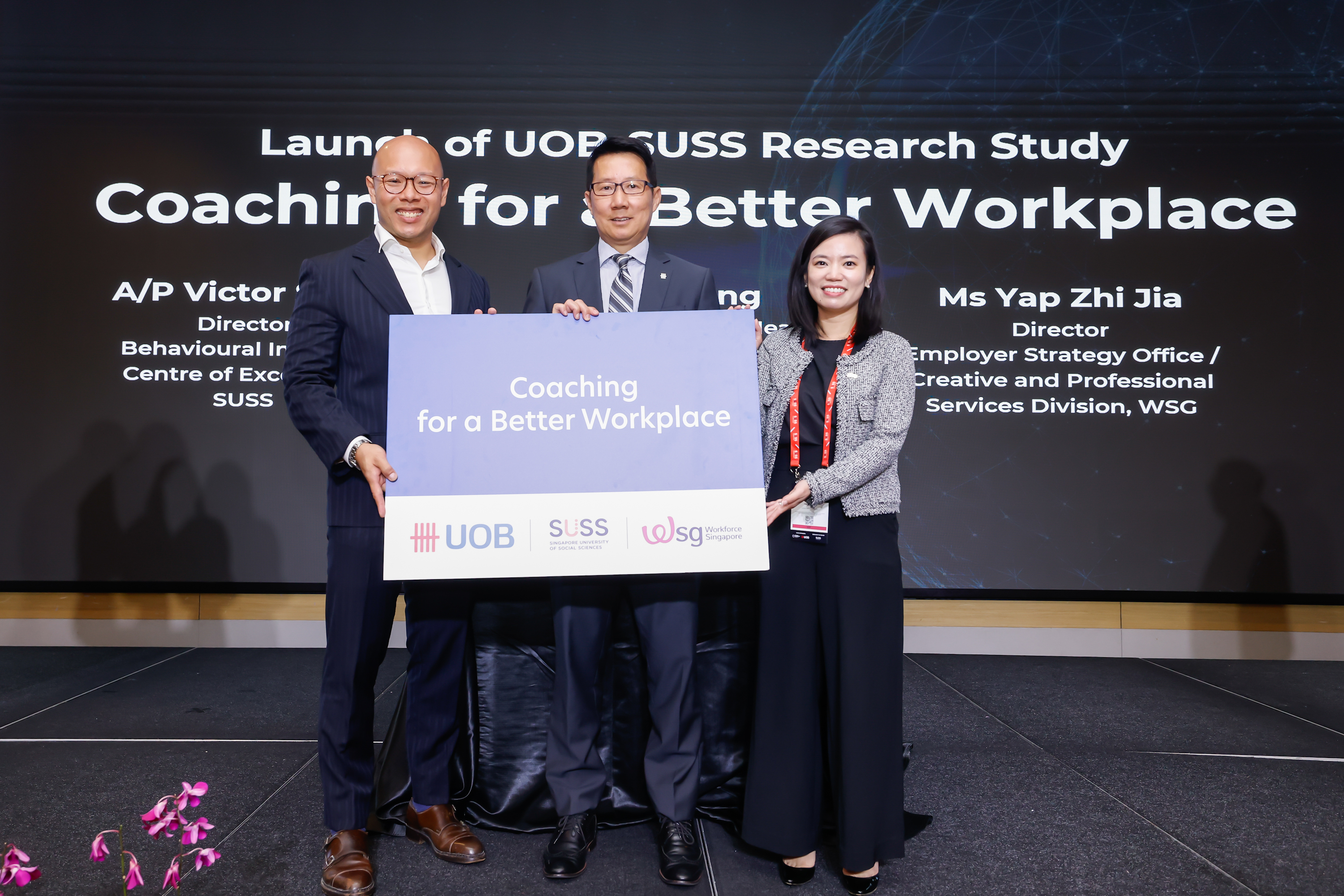
From left: Associate Professor Victor Seah, Director, Behavioural Insights Centre of Excellence (BICE), SUSS; Mr Ian Wong, Managing Director & Head, Group International Management, UOB; and Ms Yap Zhi Jia, Director, Creative and Professional Services Division and Employer Strategy Office, Workforce Singapore at the launch of the research study.
Building on the event theme, the symposium also spotlighted coaching as a strategic enabler for workforce resilience, through the launch of a new research study by UOB in collaboration with the Behavioural Insights Centre of Excellence at SUSS.
Coaching as a Strategic Enabler for a Resilient Workplace
Launched at the symposium, the UOB-SUSS study, Coaching for a Better Workplace – Building Careers & Enhancing Performance, was conducted with 284 UOB staff from 16 locations around the globe, including Singapore, Malaysia, Indonesia, Hong Kong SAR and China. Through surveys and in-depth interviews with both coaches, coachees and accountability partners1, the study found that workplace coaching, rooted in authentic relationships, drives measurable gains in both business outcomes and employee development. Building on these insights, the research revealed how coaching strengthens organisations in three key ways:
- Driving performance and growth
- Fostering well-being and collaboration
- Preparing for the future workforce
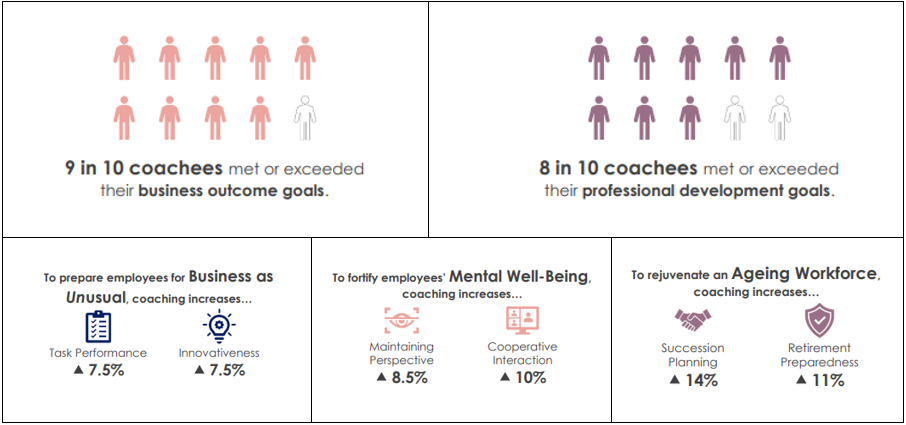
Coaching had a measurable impact on business outcomes and personal development. The findings revealed that 9 in 10 coachees met or exceeded business outcome goals, including improvements in sales, operational efficiency and client engagement. At the same time, 8 in 10 achieved professional growth targets, such as stronger leadership, communication and emotional intelligence.
Coaching also strengthened core workplace capabilities, with task performance and innovativeness both increasing by 7.5% – supporting organisational agility and competitiveness in today’s fast-evolving business environment.
Beyond performance metrics, the study also emphasised that coaching contributed meaningfully to employee mental well-being. Coachees reported a 10% increase in cooperative interaction2, and an 8.5% improvement in maintaining perspective3. Alongside steady gains in stress management and relationship-building for supportive networks both within and beyond the workplace, these shifts foster more resilient, collaborative teams – a foundation for sustainable success.
Beyond immediate results, to support Singapore and Asia’s ageing workforce, the study also found that coaching prompted meaningful reflection on long-term challenges. Succession planning rose by +14% and retirement preparedness by 11%, especially among first-time coachees. These outcomes highlight coaching’s potential to rejuvenate mature talent, facilitate knowledge transfer and strengthen long-term workforce sustainability.
Overall, first-time coachees consistently displayed higher gains than their experienced counterparts, highlighting coaching’s potential to unlock untapped leadership capacity and accelerate growth.
Partnerships for Leadership with Purpose
Now in its third year, the Global Leadership Symposium reflects the ongoing commitment and collaboration between SUSS, UOB, and SMF to nurture future-ready leadership across Asia. The partnership brings together the academic rigour of SUSS, the regional business insights of UOB, and the industry reach of SMF to address workforce needs and advance social good.
Professor Robbie Goh, Provost, SUSS, said, “The Global Leadership Symposium, co-hosted with UOB and SMF, is a timely platform for conversations on leadership and workforce transformation. One critical aspect of this transformation is coaching, and our joint study with UOB shows that it leads to concrete business outcomes, well-being and succession readiness. For SUSS, these insights reinforce our mission to nurture leaders who combine professional competence with purpose, and who can make a meaningful impact in both their organisations and society.”
Mr Ian Wong, Managing Director and Head of Group International Management, UOB, said, “Strong leadership is essential for businesses to stay competitive and seize opportunities in today’s fast-changing global economy. This study reaffirms the value of coaching as a strategic enabler to strengthen performance, build resilience and nurture the next generation of leaders. At UOB, we are committed to developing purpose-driven leaders who can drive growth with purpose, and elevate Singapore and Asia’s enterprises on the global stage.”
Mr Lennon Tan, President of SMF, said, “In today’s interconnected world, businesses must have a global perspective to thrive. As our economy is fundamentally reliant on the outside world, shocks—be they technological, regulatory, or geopolitical—reach us quickly, but so do opportunities. Our three-year partnership with SUSS and UOB on the Global Leadership Symposium highlights a shared commitment to building a coaching culture that equips our business leaders with the perspective and agility to navigate this rapidly changing landscape, as outlined in the study's findings. By fostering a culture of coaching, we are helping to ensure Singapore remains trusted and relevant globally.”
Symposium Highlights
Following the launch of the coaching study, the symposium featured a panel discussion on “Building Global-Ready Talent for Singapore’s Future Economy”, with the following speakers:
- Mr Ian Wong, Managing Director & Head, Group International Management, UOB
- Mr Lennon Tan, President, SMF
- Ms Yap Zhi Jia, Director, Creative and Professional Services Division and Employer Strategy Office, Workforce Singapore
- Ms Janet Sarah Neo, Founder, NeuroSustain AI
1 Accountability partners are direct supervisors, skip-level bosses or HR partners.
2 Cooperative interaction involves coachees actively seeking feedback, offering support, and collaborating with colleagues.
3 Maintaining perspective refers to the coachee’s ability to reframe setbacks, stay focused, and manage negativity.