Founding Director, Teaching and Learning Innovation Centre (TALIC) & Professor, Faculty of Education, The University of Hong Kong
Keynote: Future-Ready Graduates: Building a Global Holistic Competency Foundation in the Age of AI
Founding Director, Teaching and Learning Innovation Centre (TALIC) & Professor, Faculty of Education, The University of Hong Kong
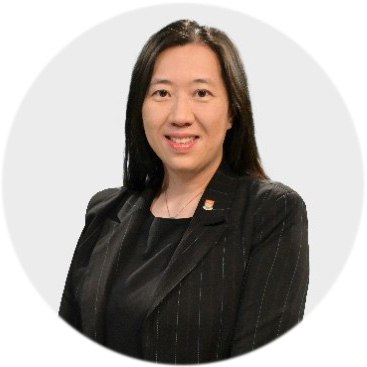
Abstract:
As artificial intelligence continues to transform how we live, work, and learn, the question facing higher education is no longer what students know, but who they are becoming. In a world where knowledge is increasingly accessible and automated, future readiness depends on the development of holistic competencies, integrating skills, values, attitudes, and identity. This keynote introduces the vision and work of the International Holistic Competency Foundation (IHCF) as a global response to this educational shift. Building on research in experiential learning and assessment, the keynote argues that holistic competencies, such as critical thinking, adaptability, collaboration, ethical judgement, and self-management must form the foundation of future-ready education. These competencies are not only essential for employability but are equally critical for navigating complexity, uncertainty, and societal challenges in the AI era. Central to this discussion is how experiential learning provides the context in which holistic competencies are developed authentically through action, reflection, and engagement with real-world challenges. However, without robust frameworks and quality assurance, these competencies risk remaining invisible or undervalued. The IHCF addresses this gap by offering a structured approach to defining, developing, assessing, and recognising holistic competency outcomes across educational contexts. The keynote will explore how institutions can embed a holistic competency foundation into curricula, assessment, and quality assurance systems, moving beyond fragmented approaches towards a coherent, global standard. Ultimately, it calls for a reimagining of education, one that prepares graduates not just to work with AI, but to lead, adapt, and thrive in an increasingly complex world.
Biography:
Professor Cecilia K. Y. Chan is an internationally recognised leader in artificial intelligence (AI) in education and holistic competency development, she is ranked #52 globally in Education and among the Top 2% of scientists (Stanford–Elsevier, 2025). She is Founding Director of the Teaching and Learning Innovation Centre (TALIC) and Professor at the Faculty of Education in the University of Hong Kong. She has published extensively in leading journals such as Educational Research Review and the International Journal of Educational Technology in Higher Education. Her scholarship has shaped international discourse on digital education, and assessment, earning awards including the HKU Young Researcher Award, the HKU Research Output Prize, and the UGC HK Excellence Teaching Team Award.