
Every decision has consequences. Economics helps you understand the forces behind them.
Economics is a dynamic and influential field that touches nearly every aspect of our lives. It examines how individuals, organisations and societies make decisions, including those shaped by institutional contexts, and how these decisions affect the way needs and wants are met. In doing so, economics provides valuable insights into how societies function, respond to change and evolve over time.
The Minor in Applied Economics aims to equip students with a strong foundation in economic thinking, together with applied research and analytical skills that are valuable for understanding business, social and policy issues. The minor also explores how economic approaches can contribute to improving social welfare and addressing environmental challenges such as climate change, emissions reduction, carbon pricing, and incentives for the development and adoption of renewable energy. Through these areas of study, students will gain exposure to issues relating to environmental sustainability and the advancement of social good.
Hear from the Head (Minor in Applied Economics)
A briefing on the minor will be held before or during the declaration exercise for students who are interested to take the minor. Stay tuned for more information.
News and Events
Quah, E. & Or, E. (2026). People care about clean air. Climate action starts there. The Business Times.
As Haze Returns, the Case for Acting Against Pollution and Global Warming Sharpens
Dr Eugene Or and Professor Euston Quah wrote an op-ed in The Business Times, highlighting the similarities between the causes of haze and global warming and the benefits of reducing emissions at their common source.
View commentary →Routledge-ERIA Studies in Development Economics (2026)
Carbon Pricing in ASEAN and East Asia: Integration and Policy Directions
Assoc Prof Chang Youngho co-published this book examining how countries across ASEAN and East Asia are designing, implementing and refining carbon pricing mechanisms to meet increasingly ambitious climate commitments.
View book →Feng, Q., Wang, Z., & Zhou, S. (2026). Data Types and Empirical Methods in 27 Top Economics Journals.
Data Types and Empirical Methods in 27 Top Economics Journals
Dr Zhou Shihao co-published this article in The Singapore Economic Review. The study provides a systematic analysis of the data types and empirical methods used in 27 leading economics journals.
View article →Singapore Economic Review, Vol. 71, No. 6, pp. 1687-1718 (2026)
Cost of Drug Crime in Singapore
Dr Tan Tsiat Siong and Dr Eugene Or co-published this article in The Singapore Economic Review. The study estimates the cost of drug-involved crime in Singapore by drug type in 2010 and 2015.
View article →The International Journal of Technology, Knowledge, and Society (2026)
Digital and Decentralized Global Value Chains? Industry 4.0 and the Advent of Blockchain Technology
Dr Pan Zhengqi published the article in The International Journal of Technology, Knowledge, and Society (Online First).
View article →Get to Know Our Faculty...
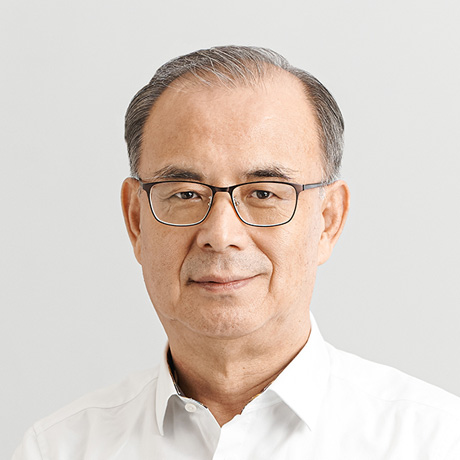
Assoc Prof Chang Youngho
Dr Chang is an Associate Professor at the School of Business. He specializes in the economics of climate change, economic-energy-environmental modeling, energy and security, oil and macroeconomy, the economics of electricity market deregulation and green finance and sustainability.
He has published more than 70 papers in internationally referred academic and nine edited books. As a consultant, he has carried out a cost-benefit analysis that examined the economics of carbon emissions reductions for a small open economy, analyzed market power in a deregulated electricity market, forecasted global demand for methanol, and examined the impact of carbon control on operations and supply chain.
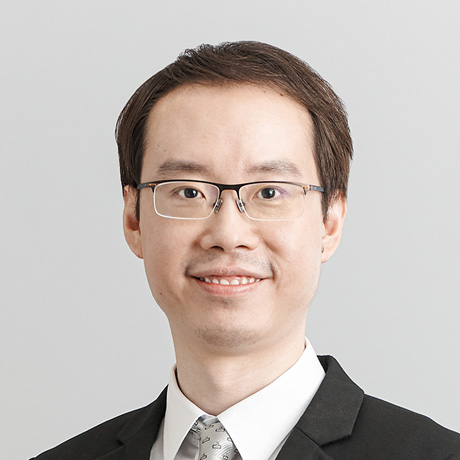
Dr Pan Zhengqi
Dr Pan is a Senior Lecturer at the School of Business. He holds a PhD in Political Science from the University of North Carolina at Chapel Hill and was previously a Postdoctoral Research Fellow at the National University of Singapore’s Global Production Networks Centre.
His research spans international political economy and the political economy of Asia, with particular interests in global value chains, international trade and investment, economic sanctions, and US-China relations.
His work has appeared in journals including Advances in Complex Systems, European Journal of East Asian Studies, and China and the World. He uses social network analysis and computational social science methods to examine how global economic networks and patterns of interdependence shape geopolitical cooperation and contestation, economic statecraft, and structural power.
Dr Pan is currently on the SUSS Teaching Awardee Honour Roll (2025–2027), following three consecutive years of SUSS teaching awards and recognition from 2022 to 2024.
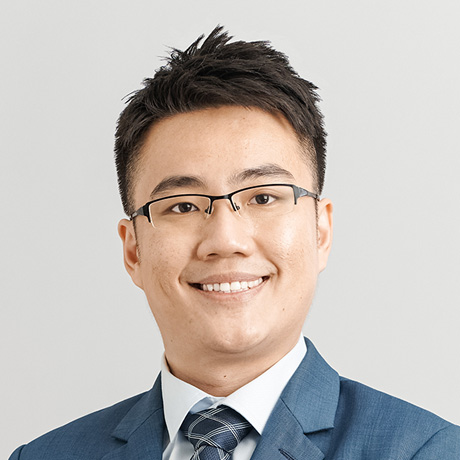
Dr Tan Tsiat Siong
Dr Tan is a Senior Lecturer at the School of Business, and Deputy Director at the Behavioural Insights Centre of Excellence. His interests include applied microeconomics, environmental economics, and behavioural economics.
His work draws on applied econometrics, cost–benefit analysis, and policy evaluation to understand and assess the effectiveness of policies. He is particularly interested in how behavioural insights can inform interventions that improve social outcomes.
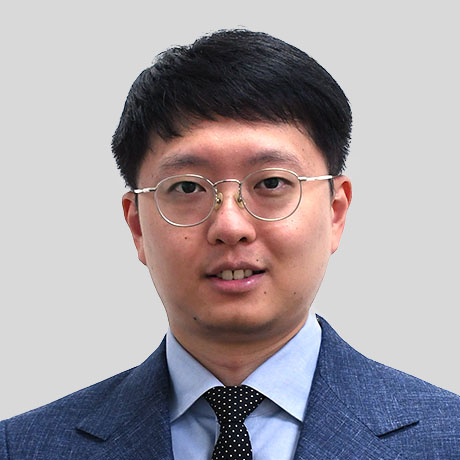
Dr Zhou Shihao
Dr Zhou is a Lecturer in Economics at the School of Business. Prior to joining SUSS, he worked as a Data Scientist at Standard Chartered Bank and as an Economist in the energy sector. His research interests include macroeconomics, applied econometrics, energy economics, and sustainable finance. His research focuses particularly on electricity markets and energy transition, inflation dynamics, corporate finance, and sustainability.
His work has been published in the Journal of Economic Behavior & Organization, The World Economy, and the Singapore Economic Review.

Dr Eugene Or
Dr Or is a Lecturer at the School of Business. He specialises in Policy Evaluation using Cost-Benefit Analysis and Causal Inference, as well as Urban Economics. His research seeks to understand social problems and evaluate policies, including but not exclusive to labour, crime, well-being and transport, with the ultimate objective of seeking solutions to improve society’s welfare.
Dr Or is the Asia Winner of the Global Undergraduate Awards and a recipient of the Singapore Ministry of Trade and Industry (Economist Service) Best Thesis Prize.
Dr Or is currently the Honorary Assistant Secretary at the Economic Society of Singapore, and the Special Assistant to Editor at the Singapore Economic Review. For more information on Dr Or, you may visit https://sites.google.com/d/12lNXaAfisO025tC4A9CpbQ_ut9ZffqM-/p/14Pw7Z7Rsytt580-xLowuoH3w3lzVJ3oE/edit.
Career Prospects
An economics degree helps students prepare to work in law, government, finance, business, consulting, and the non-profit sector. Economics-trained individuals hold influential positions in many different segments of the workforce in Singapore and beyond, including senior leadership positions in government and industry, which suggests having a deeper understanding of economics will be useful in students’ careers.
What You Will Gain
Economic Insight
Understand key economic principles and current developments.
Analytical Thinking
Build confidence in analysing data and interpreting evidence.
Problem Solving
Explore responses to social, environmental and economic challenges.
Sustainable Impact
Develop an appreciation of sustainability and positive social impact.
Future-Ready Skills
Strengthen adaptability, resilience and independent learning.
Curriculum
The Minor in Applied Economics is open to undergraduate students who can take a minor.
To obtain the Minor in Applied Economics, students are required to complete 30 credit units (cu) of courses, including at least 10 cu of level 3 and above courses.
Students enrolled before July 2023 semester are required to complete 40 cu of courses, including an additional 10 cu of electives.