Level: Intermediate
Duration: 6 days
Date: 16 - 23 November 2026
Venue: Singapore University of Social Sciences
Synopsis
The Crisis Management for Leaders (CML) Programme is a six-day executive course jointly developed by the Singapore University of Social Sciences (SUSS) and the Home Team Academy (HTA). It is designed to strengthen Whole-of-Government (WOG) leaders’ operational readiness and leadership capabilities to manage complex crises.
Through interactive lectures, simulation exercises, and case studies, participants will learn to anticipate risks, make sound decisions under pressure, and communicate clearly in times of uncertainty. The programme integrates operational perspectives with conceptual frameworks, offering a balanced blend of practical and theoretical insights.
Participants will develop personal mastery in high-stress environments, sharpen situational awareness, and enhance team, organisational, and community resilience. They will also learn to mobilise cross-agency collaboration effectively. By the end of the programme, participants will be equipped with the confidence to lead and support senior leaders during national-level crises.
Who Should Attend
Senior public officers in the Singapore Public Service serving in leadership positions such as Deputy Directors, Senior Assistant Directors, or equivalent roles. Participants may not have crisis preparedness as their main focus in their day-to-day responsibilities, but are or will be involved directly or indirectly in crisis management.
Topics
- Sense-Making & Understanding Crisis Complexity
- Decision-Making & Whole-of-Government Coordination
- Influence, Crisis Communications & Trust Management
- Leadership Under Stress & Human Systems Management
- Recovery, Continual Improvement & Resilience Building
- Strategic Crisis Exercise (Capstone Simulation)
Objectives
Upon completing the course, participants will:
- Develop crisis leadership capability across the crisis lifecycle
- Strengthen judgement under uncertainty
- Enhance Whole-of-Government coordination effectiveness
- Build communication and trust stabilisation capability
- Strengthen leadership resilience and human systems management
Learning Outcomes
A. Knowledge and Understanding (Theory Component)
By the end of this course, participants should be able to:
- Assess multi-layered crises quickly including interconnected risks and cascading effects.
- Explain the Whole-of-Government Crisis Management Capability Development Framework across the crisis lifecycle (Pre-Crisis, Crisis, Post-Crisis), including key roles and interdependencies.
- Evaluate crisis leadership challenges and lessons from case studies to inform effective practice within Singapore’s context.
B. Key Skills (Practical Component)
By the end of this course, participants should be able to:
- Apply sense-making, decision-making, coordination, and crisis communication strategies in dynamic and uncertain environments.
- Demonstrate ability to lead with confidence during crisis including managing stress, sustaining team performance, and maintaining stakeholder trust.
- Develop and integrate recovery, After-Action Review (AAR), and resilience strategies to strengthen organisational capability and preparedness.
Schedule*
| Time | Agenda |
|---|---|
| Day 1 - Making Sense of Crisis Situations | |
| 09:00 – 10:30 | Opening & Introduction: Adopting a Whole-of-Government Approach
|
| 10:30 – 10:45 | Break |
| 10:45 – 12:30 | Singapore Crisis Landscape & WOG Framework Integration
|
| 12:30 – 13:30 | Lunch |
| 13:30 – 15:00 | Understanding Crisis Complexity & Sense-Making
|
| 15:00 – 15:15 | Break |
| 15:15 – 16:30 | Sense-Making Lab
|
| 16:30 – 17:00 | Reflection & Wrap-Up |
| Day 2 - Making Decisions & Coordinating Actions | |
| 09:00 – 12:30 | Crisis Decision & Coordination Lab (TTX1)
|
| 12:30 – 13:30 | Lunch |
| 13:30 – 15:00 | Decision-Making Frameworks & Models
|
| 15:00 – 15:15 | Break |
| 15:15 – 17:00 | Decision Review & Reflection
|
| Day 3 - Communicating and Maintaining Trust | |
| 09:00 – 10:30 | Crisis Communication Fundamentals
|
| 10:30 – 10:45 | Break |
| 10:45 – 12:15 | Crisis Communication Strategies
|
| 12:15 – 13:15 | Lunch |
| 13:15 – 15:00 | The Public Trust Equation
|
| 15:00 – 15:15 | Break |
| 15:15 – 17:00 | Site Visit |
| Day 4 - Leading Under Stress | |
| 09:00 - 10:30 | Psychological Safety & Leadership Under Pressure
|
| 10:30 - 10:45 | Break |
| 10:45 - 12:15 | Emotional Intelligence & Team Support
|
| 12:15 - 13:15 | Lunch |
| 13:15 - 15:30 | Crisis Decision & Leadership Lab (TTX 2)
|
| 15:30 - 15:45 | Break |
| 15:45 - 17:00 | Leadership Reflection & Integration
|
| Day 5 - Recovering and Learning After Crisis | |
| 09:00 - 10:30 | Recovery Leadership & Phases of Crisis Management
|
| 10:30 - 10:45 | Break |
| 10:45 - 12:15 | Trust Rebuilding & Strategic Communication
|
| 12:15 - 13:15 | Lunch |
| 13:15 - 15:00 | After-Action Review (AAR) Lab
|
| 15:00 - 15:15 | Break |
| 15:15 - 17:00 | Institutionalising Learning & Building Resilience
|
| Day 6 - Strategic Crisis Exercise | |
| 09:00 - 10:30 | Recap & Review of WOG Framework
|
| 10:30 - 10:45 | Break |
| 10:45 - 13:00 | Capstone Strategic Crisis Exercise
|
| 13:00 - 14:00 | Lunch |
| 14:00 - 15:30 | Team Presentations & Leadership Reflection
Structured After-Action Review (Capstone Debrief)
|
| 15:30 - 15:45 | Break |
| 15:45 - 16:30 | Guest Speaker/Panel Discussion
|
| 16:30 - 17:00 | Closing |
*Subjected to changes.
Assessments
- Presentations
- Practical simulations
Requirements
Officers from the Singapore Public Service in designated WOG leadership roles.
Trainer's Profile

Dr Razwana Begum
Dr. Razwana Begum is an Associate Professor and Head of Programme at the Singapore University of Social Sciences (SUSS). She conceptualised Singapore’s flagship degrees in Public Safety and Security and Global Security and Strategy, and led the design and development of crisis management and related courses. Through her work, she has trained and mentored professionals across Singapore and internationally, contributing to the advancement of the field globally
She holds a PhD from Monash University, Australia, focusing on business ethics, leadership, and restorative justice, and holds degrees in law, criminology, counselling, and social work.
With over 18 years in public service, policy development, and programme leadership, she brings practical and academic insights to teaching and training. An active researcher and international speaker, she is also engaged in community services through PPIS and MENDAKI, contributing to sector development as an Adjunct Principal Scientist at Centre for Advanced Technologies in Online Safety (CATOS), and served as a Nominated Member of Parliament from 2023 to 2025.
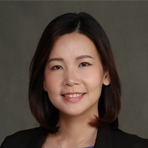
Dr Sheryl Chua
Senior Lecturer and Head (Public Safety and Security Programme), Singapore University of Social Sciences
Sheryl was a psychologist with the Ministry of Home Affairs (MHA). Her work involved developing the Assessment Centre exercises for the assessment and selection of scholars and high-potential officers. She is a certified para-counsellor and is trained in critical incident stress management (CISM), suicide first aid and psychological first aid. She has conducted research and published in the area of crisis leadership. She conducts crisis leadership training for overseas delegates, university settings and community at large.
Her research interests are organisational psychology, crisis leadership, well-being, labour and employment studies.
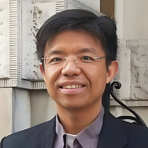
Dr Paul Cheak
Dr Paul Cheak is the Executive Director of the Singapore Institution of Safety Officers (SISO), and serves as an Associate Lecturer at the Singapore University of Social Sciences (SUSS), teaching several modules on Public Safety and Security.
He is an experienced multidisciplinary leader with close to 30 years of service in the Singapore Armed Forces. He holds a PhD in Occupational Health and Safety, and five Master's degrees ranging from science and engineering to strategic studies and business administration, awarded by institutions such as the University of Cambridge, the National University of Singapore, and the US Army Command and Staff College. He is also a Certified Information Systems Security Professional (CISSP) and holds an Advanced Certificate in Learning and Performance from the Institute of Adult Learning.
He is experienced in crisis management and interagency coordination, serving several senior leadership tours as head of the Army's corporate communications department, Commander of the SAF Military Intelligence Institute, Chief Army Intelligence Officer, Commandant of the Goh Keng Swee Command and Staff College, and head of a corporate university in the private security sector. Dr Paul was awarded the Public Administration Medal (Silver) (Military) in 2017 and the Long Service Medal (Military) in 2020.
Application Procedures
Company-sponsored applicants: Please obtain the registration link from your company’s HR representative
Course Fee

For clarification, please contact the SUSS Academy via the following:
Telephone: +65 6330 9110
Email: [email protected]