
BLOGS
UNBOUND brings together stories that don’t follow a single path – shaped by real-world challenges, lived experience, and the ideas that emerge along the way. From research to community impact, these are the stories behind SUSS.
Keep up-to-date by subscribing to our monthly LinkedIn newsletter.
Subscribe on LinkedIn
Does Our Definition of Success Leave Persons with Disabilities Behind?
21 Sep 2026|4 Mins Read
For “Daniel” (not his real name), a neurodivergent employee, a conversation made all the difference.

“I got to have a chat with the general manager, the HR manager, my own manager, and the chats did help clarify what I was struggling with and what I needed help in,” he shared.
“Can we actually figure something that can work for both of us? Like a solution that we are (both) okay and agree on.”
The conversation created space to discuss both the support he needed and what he could contribute.
But for many neurodivergent individuals, that conversation is closed off before it even begins.
Daniel’s experience also illustrates a broader question that Associate Professor Lim Lee Ching, Director of Singapore University of Social Sciences’ Node for Inclusive Lifelong Education, has spent years examining: what happens when institutions struggle to recognise strengths that fall outside conventional expectations?
Conventional measures such as academic grades, career titles, and income are often built around a narrow range of cognitive and social abilities, making some strengths easier for institutions to recognise than others.
“We are usually rewarding pace, not depth,” Professor Lim says.
He points to what he calls the “deep, methodical learner”.
In systems that reward speed, quick responses, and achievement against fixed timelines, these individuals may be perceived as underperforming. Yet their strengths often emerge differently.
“What I have seen instead is that original thinking tends to arrive later in adulthood, once enough time has passed for complex understanding to compound,” he shares. “It rarely announces itself as rapid performance.”
The challenge, Professor Lim argues, is that schools, workplaces, and society often make judgements before those strengths become visible.
The consequences can extend well beyond the classroom.
Mr Max Soh, Research and Policy Manager at Disabled People’s Association, has encountered persons with disabilities who were denied jobs, career development opportunities, promotions, or training despite having the relevant skills, qualifications, or expertise.
He has also seen how different the outcomes can be when the right support is put in place.
“When the proper environment cultivated by the right policies and approaches was in place, it led to almost the opposite outcome, where persons with disabilities had the opportunity and level playing field to display their talents and expertise, often leading to not only employment outcomes but gainful employment,” he says.
For Mr Soh, the difference often comes down to whether workplaces make room for conversation and have clear policies in place to make such practices consistent, rather than leaving it to assumption.
Daniel’s experience is one example.
He was not asking for expectations to be lowered, but for both sides to understand what would make those expectations achievable.
Professor Lim believes that distinction goes to the heart of inclusion.
“If the finish line itself only recognises one way of arrival, better access simply gets more people running towards a goal that was never built for them,” he says.
“A truly inclusive system has to ask what counts as competence or contribution, and allow for plural answers.”
You Might be Interested
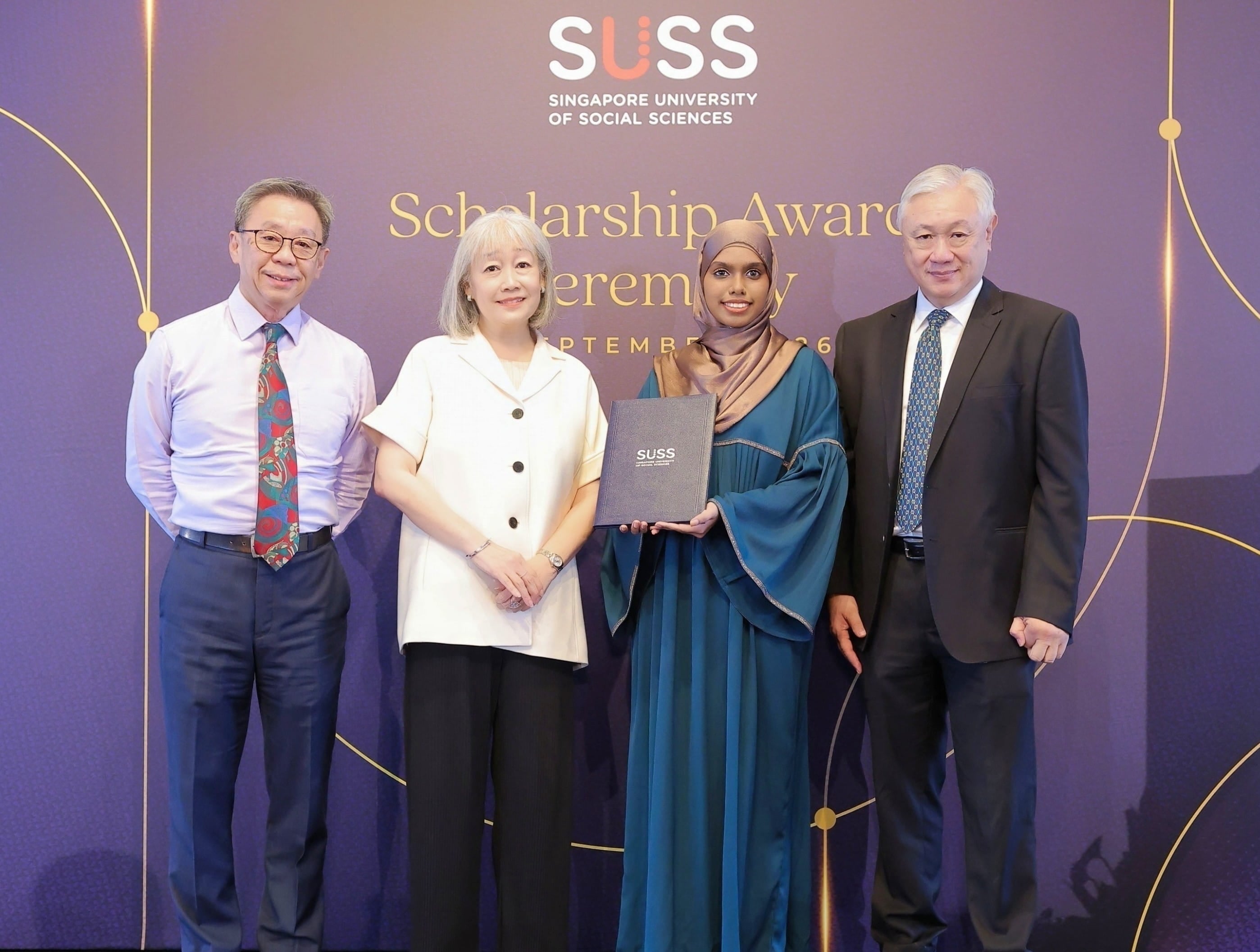
‘A Hidden Gem’: Why a Donor Backed a Student Before She Believed in Herself
Potential often seems obvious in hindsight. The harder question is what makes someone worth backing before there is proof. For SUSS donor Dr Lillyn Teh and scholarship recipient Shasmeen Banu Binte Ayoob Marican, one vote of confidence changed what she believed she could become.
21 Sep 2026|3 Mins Read

He Quit Banking for IT. What Happened Next Changed His Career.
We often celebrate career pivots, lifelong learning, and reinvention. What we talk about less is what happens when the reinvention doesn't work out. For SUSS alumnus Mr Tay Kok Choon, discovering he had chosen the wrong path turned out to be one of the most important lessons of his career.
21 Sep 2026|3 Mins Read

What Do Good Hiring Managers Notice That a CV Can't Show?
When an employee was considered for a broader leadership role, his job title and experience did not make him an obvious choice. One detail changed the conversation: people listened to him. For hiring leader Ms Lai Yng Jiun, such signals reveal what résumés and job descriptions miss.
21 Sep 2026|4 Mins Read
Subscribe to UNBOUND
UNBOUND brings together stories that don’t follow a single path – shaped by real-world challenges, lived experience, and the ideas that emerge along the way. From research to community impact, these are the stories behind SUSS.
Keep up-to-date by subscribing to our monthly LinkedIn newsletter.
Subscribe on LinkedIn