SUSS x Tripartite Collective’s Lim Kopi with Mr Lim Swee Say Session: Rethinking Tripartism for the Future of Work
Date: 27 Aug 2025
News Type:Event Highlights
School/Department: S R Nathan School of Human Development
On August 27, 2025, the S R Nathan School of Human Development Human Resource Management (HRM) Programme partnered with the Tripartite Collective to launch the inaugural session of Lim Kopi with Mr Lim Swee Say, advisor to the Tripartite Collective. Held to commemorate SG60, the session explored Singapore's unique tripartite model, built on a collaboration between the government, employers, and unions. Tripartism is a cornerstone of the country's labour success. The challenges in today's modern workforce make tripartism more critical than ever.
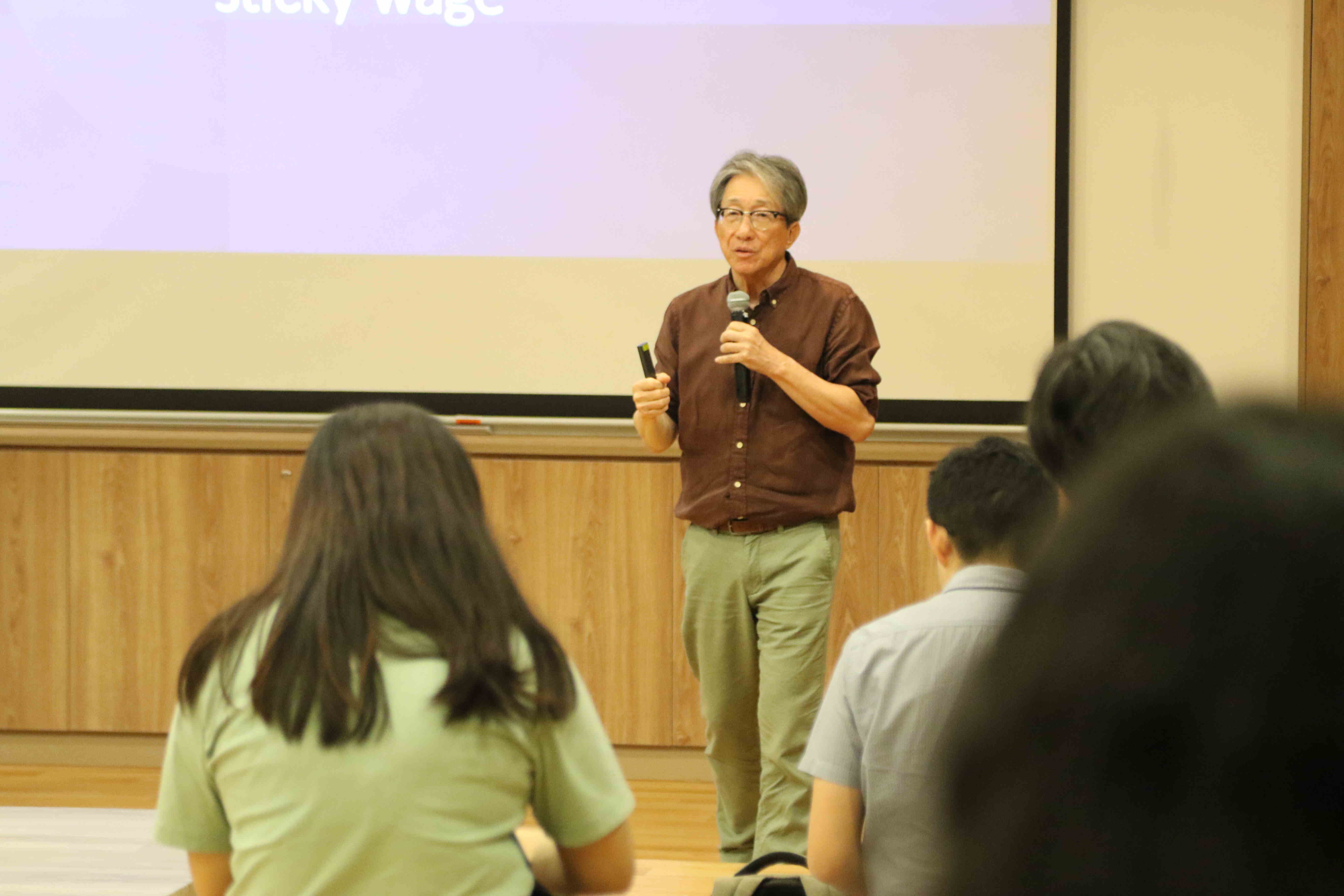
Mr. Lim delivers an engaging and impactful presentation.
The session began by addressing a common misconception: that tripartism is a unique industrial relations model that only exists in Singapore. Tripartism has existed globally for over a century. While tripartism is an established approach that brings together governments, employers and workers, few countries, such as Singapore, have managed these relationships successfully. This success stems from three guiding principles: pro-business, pro-worker, and pro-future, which promote economic competitiveness, social inclusivity, and long-term sustainability.
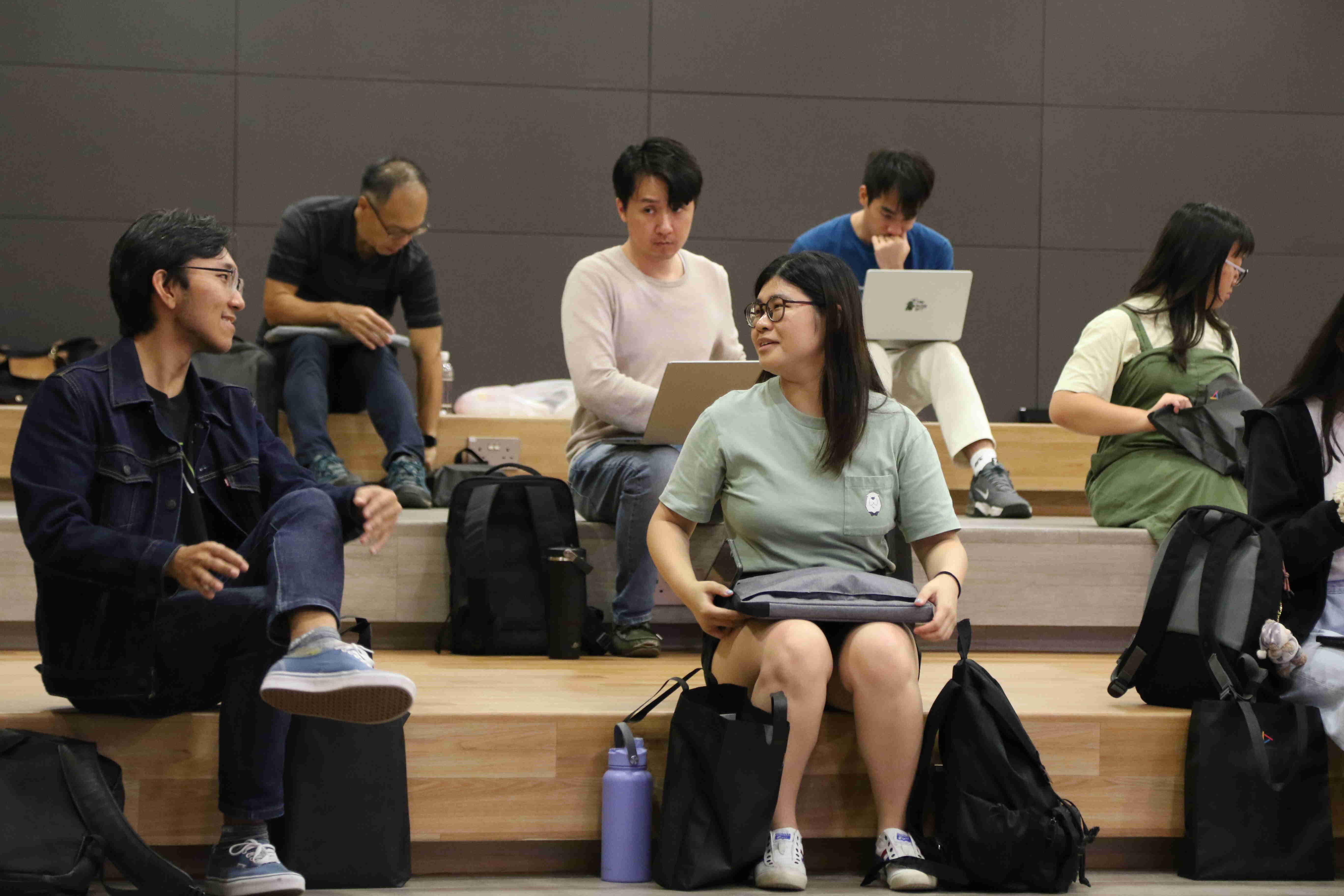
Passions ignite as participants dive into deep, insightful conversations.
Navigating the Challenges of Tripartism in the Future of Work
Students raised two pressing challenges confronting today's workforce: An ageing population and Extended Careers. Rising life expectancy and a super-aged workforce have raised concerns surrounding wage costs and career progression. Employers worry about the financial implications of retaining older workers, while younger employees fear stagnation. To address these concerns, NTUC proposed a reemployment model to enable workers to work after retirement. The upcoming Workplace Fairness Act, set to take effect in 2026 or 2027, is highlighted as a key legislative step toward protecting employees from workplace discrimination, covering protected characteristics such as age, pregnancy, and nationality. Additionally, a union for senior workers was to promote an H2P2 life: Happy and healthy, productive, and purposeful. However, feedback from the workforce will continue to be vital to achieve better living and working standards for workers.
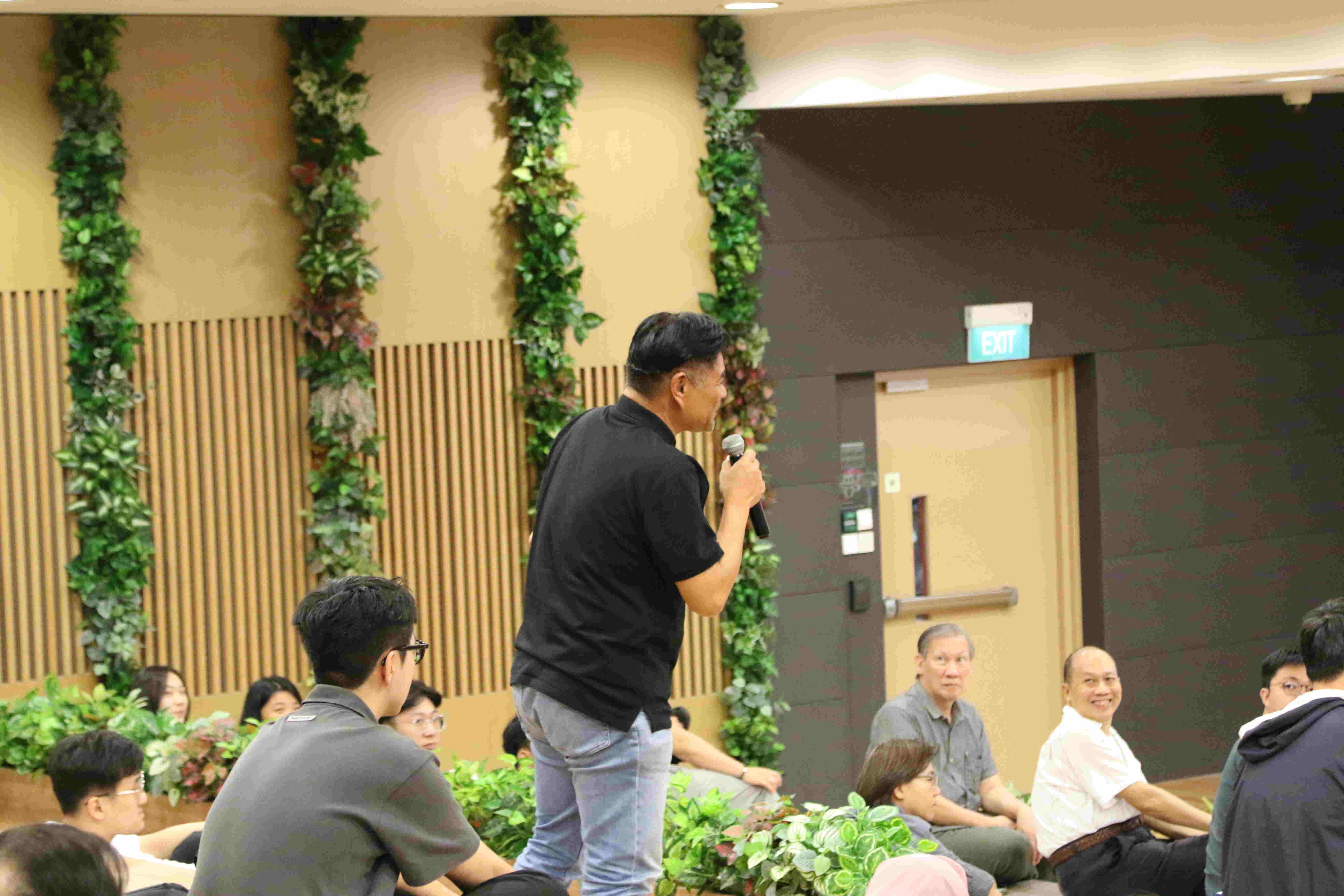
Curiosity takes centre stage during a fast-paced and engaging Q&A session.
Graduate Unemployment and Technological Disruption
The rising graduate unemployment emerged as a pressing issue, particularly as technological advancements, such as Artificial Intelligence (AI), reshape job landscapes. Some companies that initially replaced their workforce with AI had to backtrack on their strategy, recognising that AI cannot fully replace human capabilities. The commitment of the tripartite partners is to use AI to complement Human Intelligence, which is done in Changi Airport and the Public Service.
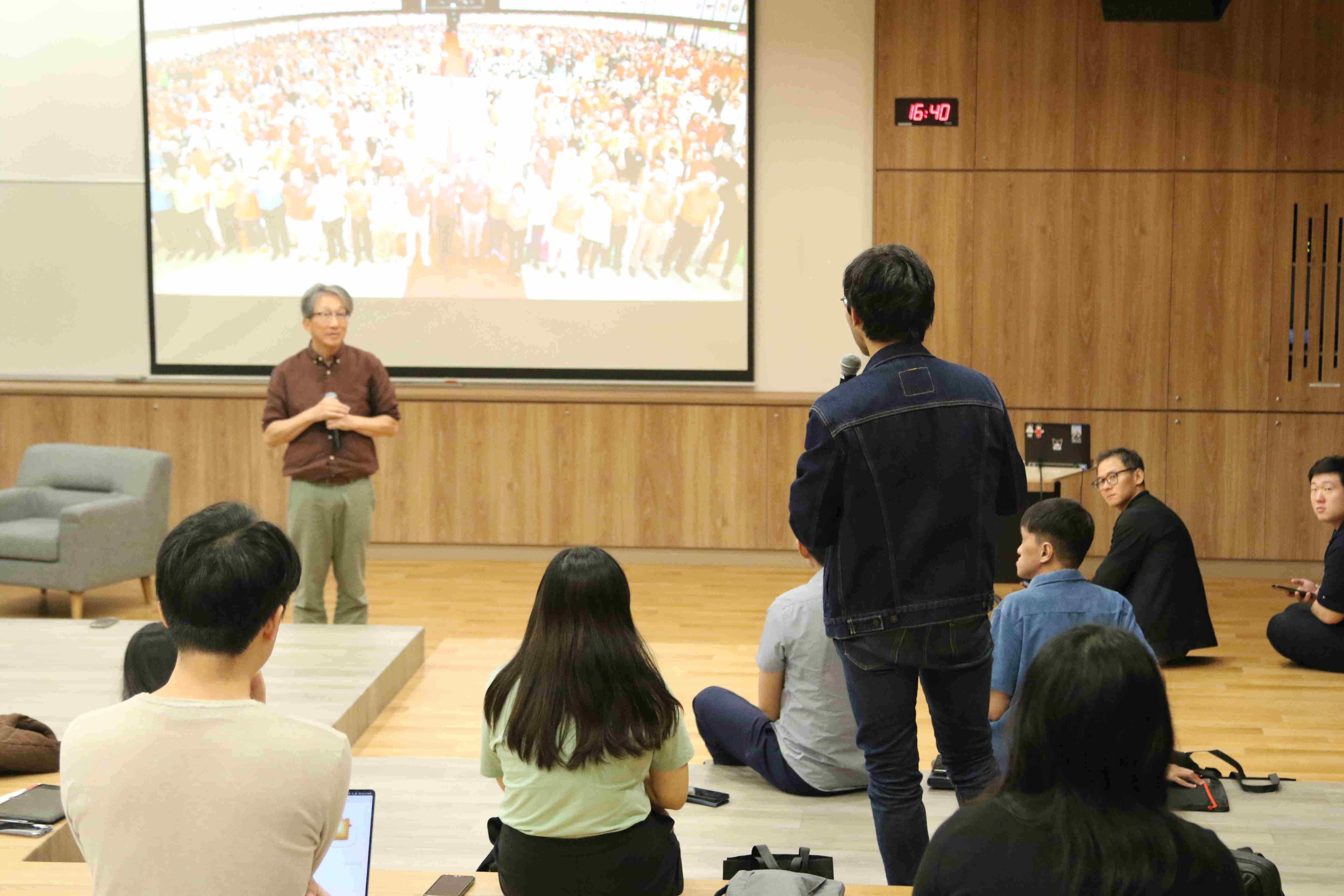
Dynamic exchanges unfold as participants pose thought-provoking questions.
Adapting to Shifting Work Norms
The broader shift in industry demands and evolving job expectations was also examined. Remote work, while convenient, has intensified global competition from workers, prompting some firms to outsource talent beyond Singapore. Gig workers were also identified as a vulnerable group, excluded from traditional employment protections. In response, the union works with these gig workers to build a fairer relationship with employers and advocate for more inclusive policies.
As the future of work continues to evolve, Singapore's tripartism model remains a vital compass to guide the nation towards resilient, fair, and forward-looking employment.
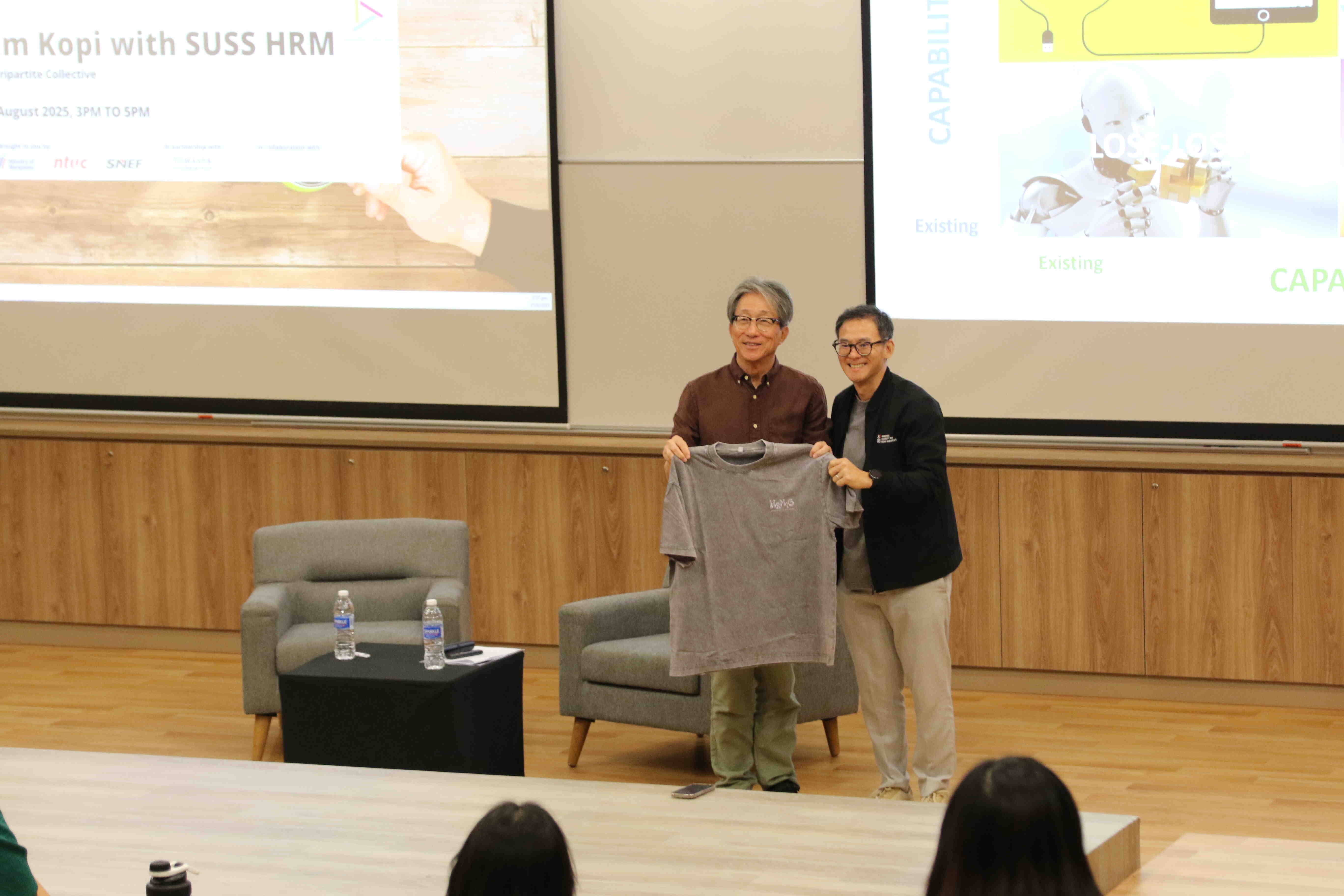
A heartfelt token of appreciation is presented to our inspiring speaker Mr. Lim Swee Say.
The S R Nathan School of Human Development thanks Mr Lim Swee Say and the Tripartite Collective for their valuable time and partnership. We also thank the Career Development Office and the HRM Student Interest Group for making this event successful. This session reflects SUSS' commitment to equipping our students with real-world perspectives and preparing them to lead in the dynamic field of human resource management.
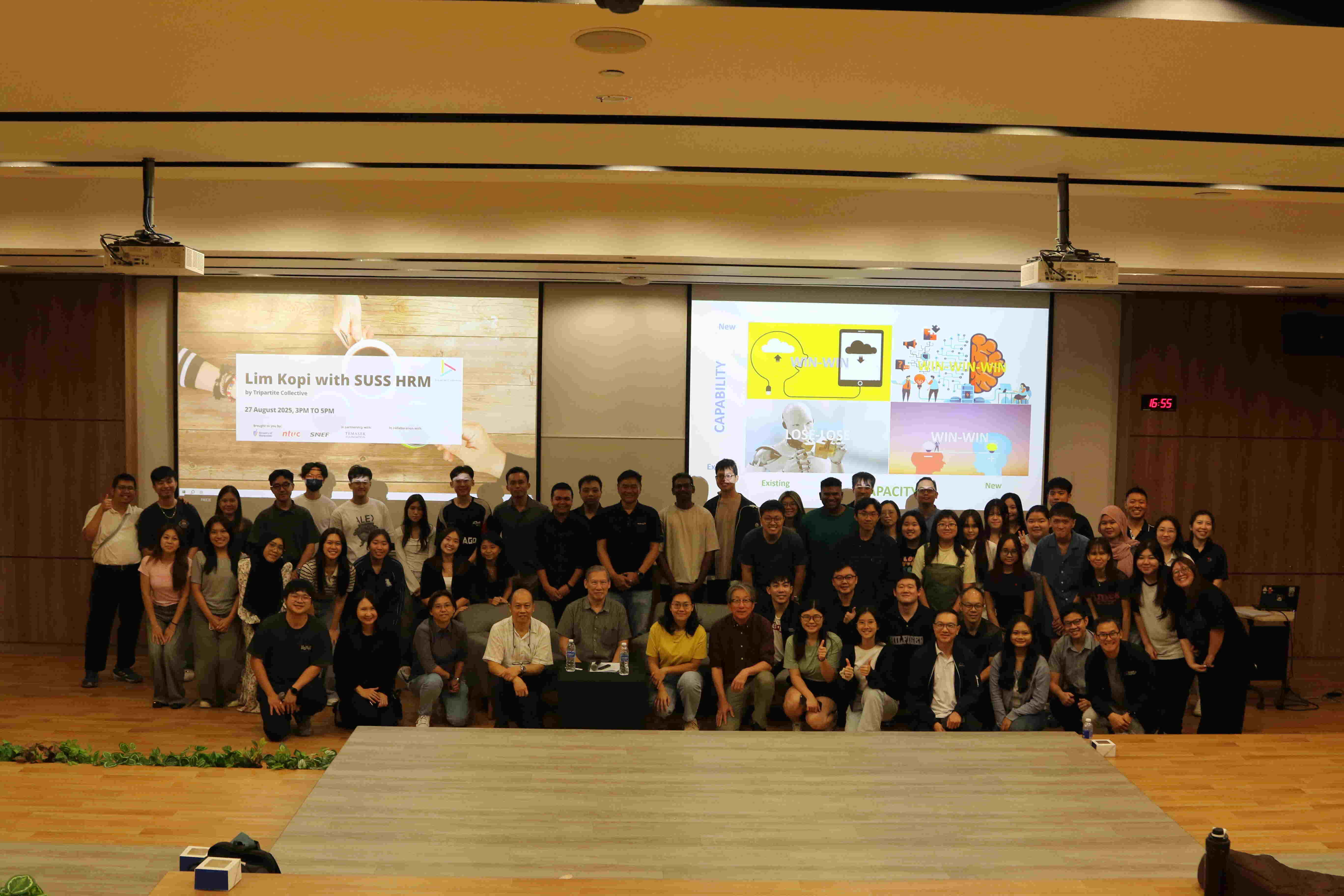
Wrapping up the session with a collective group moment.
Explore our full-time and part-time Bachelor of HRM programmes to learn more about building sustainable and inclusive workplaces.