Where Service Meets Meaning: Reflections from Community Partners’ Connect
Date: 25 Mar 2026
News Type:Event Highlights
School/Department: Service-Learning
What does it mean to serve communities meaningfully? For some, it may be giving their time and effort to make someone's day. To others, it is about transforming lives – empowering individuals, strengthening communities, and shaping experiences that extend far beyond a single moment. But what if we shift our lens to a reciprocal perspective? What does meaningful service look like then?
These questions anchored the recent Community Partners' Connect, held across two sessions on 25 and 26 March 2026. Thirty community partners from social service agencies, charitable organisations, and non-profits came together in small, candid discussions to reflect on what meaningful service looks like from their vantage point.
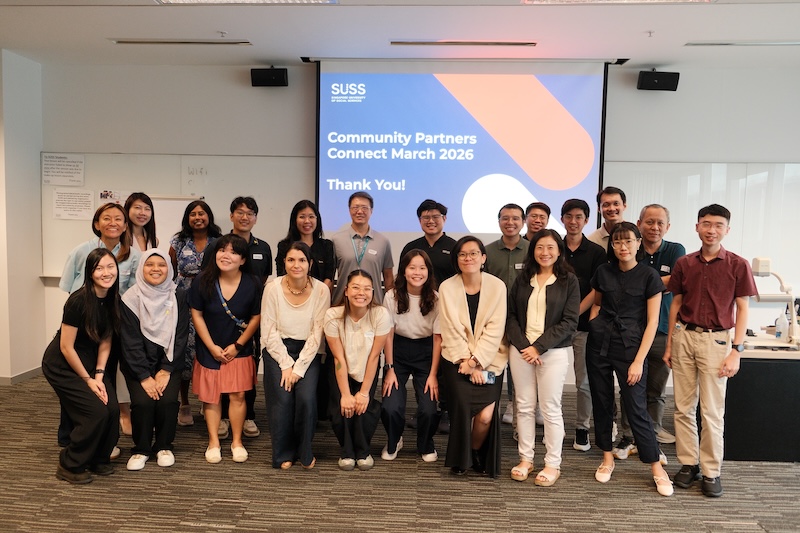 Community Partners and SUSS staff at the Community Partners' Connect March 2026 on Session 1, 25 March 2026.
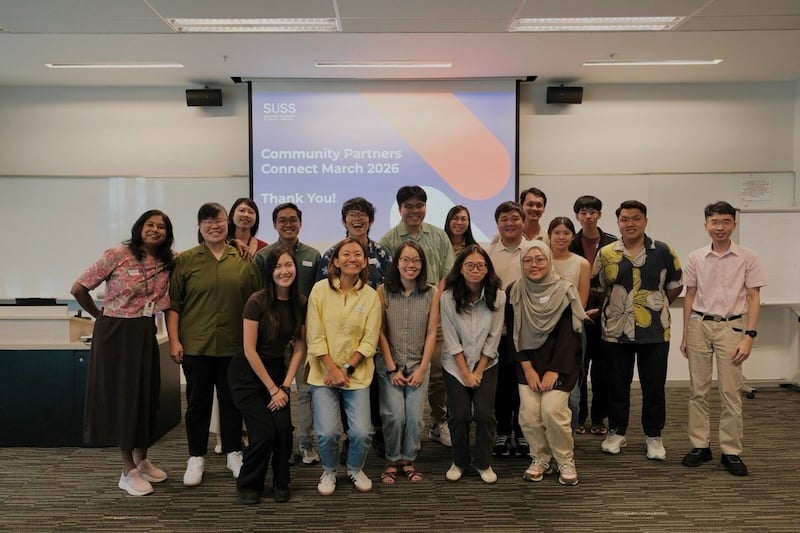
Community Partners and SUSS staff at the Community Partners Connect March 2026 on Session 2, 26 March 2026.
Central to the conversations was a seemingly simple framework: meaningful service must be both high service and high learning. High service means the work addresses actual community priorities and creates genuine impact for community members. High learning ensures students glean insights that are real, transferable, and purposeful. Balancing both is not easy, and yet, neither is sufficient on its own. A project rich in learning but light on community impact risks becoming a classroom exercise dressed in volunteerism. Conversely, one that delivers community outcomes but offers students little room to reflect or grow misses the deeper purpose of a course like NIE301 Learning with Communities – where learning is intentionally integrated with real-world community impact.
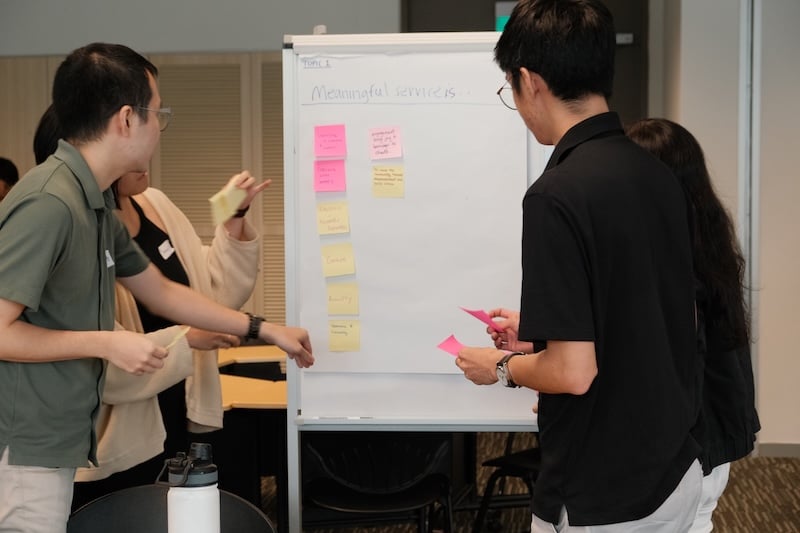
4 Community Partners sharing their views on what Meaningful Service is to them.
The strongest projects, partners observed, were those in which community priorities are defined upfront and student learning is deliberately embedded into the design—not bolted on afterwards. When that groundwork is skipped, even well-intentioned students can end up pursuing proposals shaped more by academic deliverables than by what communities actually prioritise. The structures around Service-Learning must actively support depth over completion, through intentional milestone check-ins, early proposal validation, and honest negotiation of expectations.
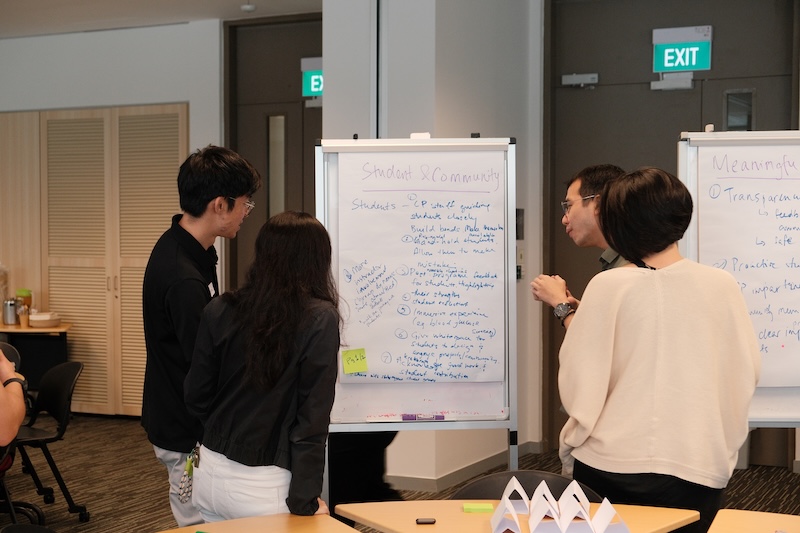
Community Partners discussing students and the community from their perspectives during a group discussion activity.
The role of community partners, therefore, extends beyond hosting projects. Many spoke of themselves as mentors and facilitators, and, in some ways, as safeguards — people who uphold the integrity of the community's experience while creating space for students to explore, stumble, and grow. This reframing asks partners to invest not just in project outcomes, but in the students themselves: to understand their motivations, build trust, and gently nudge them from going through the motions toward serving from the heart.
Threaded through the conversations was also a focus on sustainability. Meaningful service is rarely fully realised within a single semester. It accumulates through continuity, deepening relationships, and laying the foundations that future student cohorts can build upon. The most enduring projects, partners reflected, are those that leave communities with something that outlasts the students who started them.
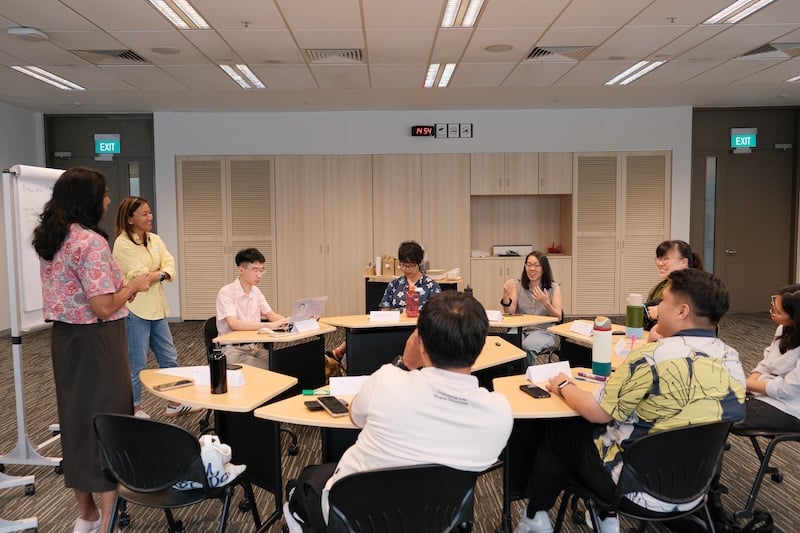
Community Partners are discussing among themselves during a group activity.
What the sessions ultimately revealed was that Service-Learning is not a formula to be applied, but a practice to be continually tended within each context. And at the heart of that practice is the reciprocal exchange posed at the outset — communities who experience that the work was done with them, not for them, and students who leave changed in how they understand others, and themselves.