On Being Human 2 - Get Your Own Wings & Plant Your Own Tree in Your Mind
Date: 27 Aug 2026
News Type:Event Highlights
School/Department: S R Nathan School of Human Development
In the second instalment of “On Being Human”, we explore the stories we carry beyond identity, belonging, and the human journey [July’s series]. Through the insights of Ms Masako Wakamiya and Professor Katsuya Iijima, we were invited to reflect on ageing not simply as a process of growing older, but as a stage of life where curiosity, purpose, connection, and the desire to contribute can continue to evolve.
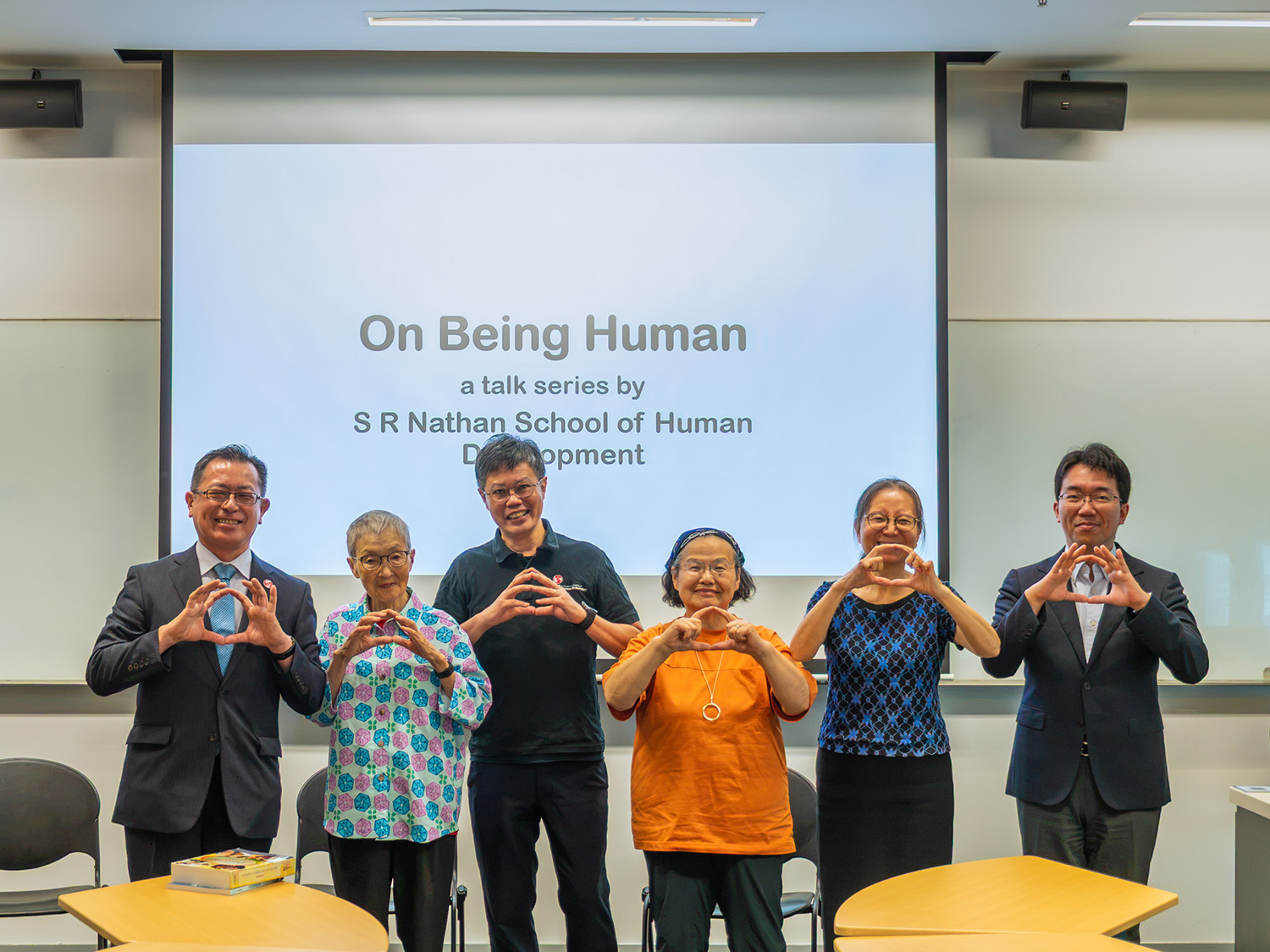
Perhaps being human is not about reaching a particular stage of life, but about continuing to become.
We are often told that learning comes to an end once we enter the working world. Ms Masako, affectionately known as “Ma-chan”, challenged this assumption through her remarkable journey as an app creator and lifelong learner.
Learning to code later in life was far from easy. Ms Masako spent more than two decades broadening her digital literacy and, through six months of programming training, eventually created Hinadan. The app is inspired by the traditional Japanese Hinamatsuri festival. When she realised that many modern apps were designed around fast-paced interactions that might not be accessible or practical for older users, she created Hinadan with older users in mind — using larger text, a simpler interface, and no penalty for mistakes.
Her efforts extended beyond technology. Recognising the challenges of loneliness and the digital literacy gap among older adults, she co-founded the Mellow Club in 1999, creating a space where older adults could connect, socialise, and exchange ideas.
She also explored creativity through Excel Art, transforming something as ordinary as a spreadsheet into a medium for artistic expression. By using the cells and colours in Microsoft Excel to create intricate artworks, she showed us that creativity does not have an age limit, nor does it have to take place in conventional ways.
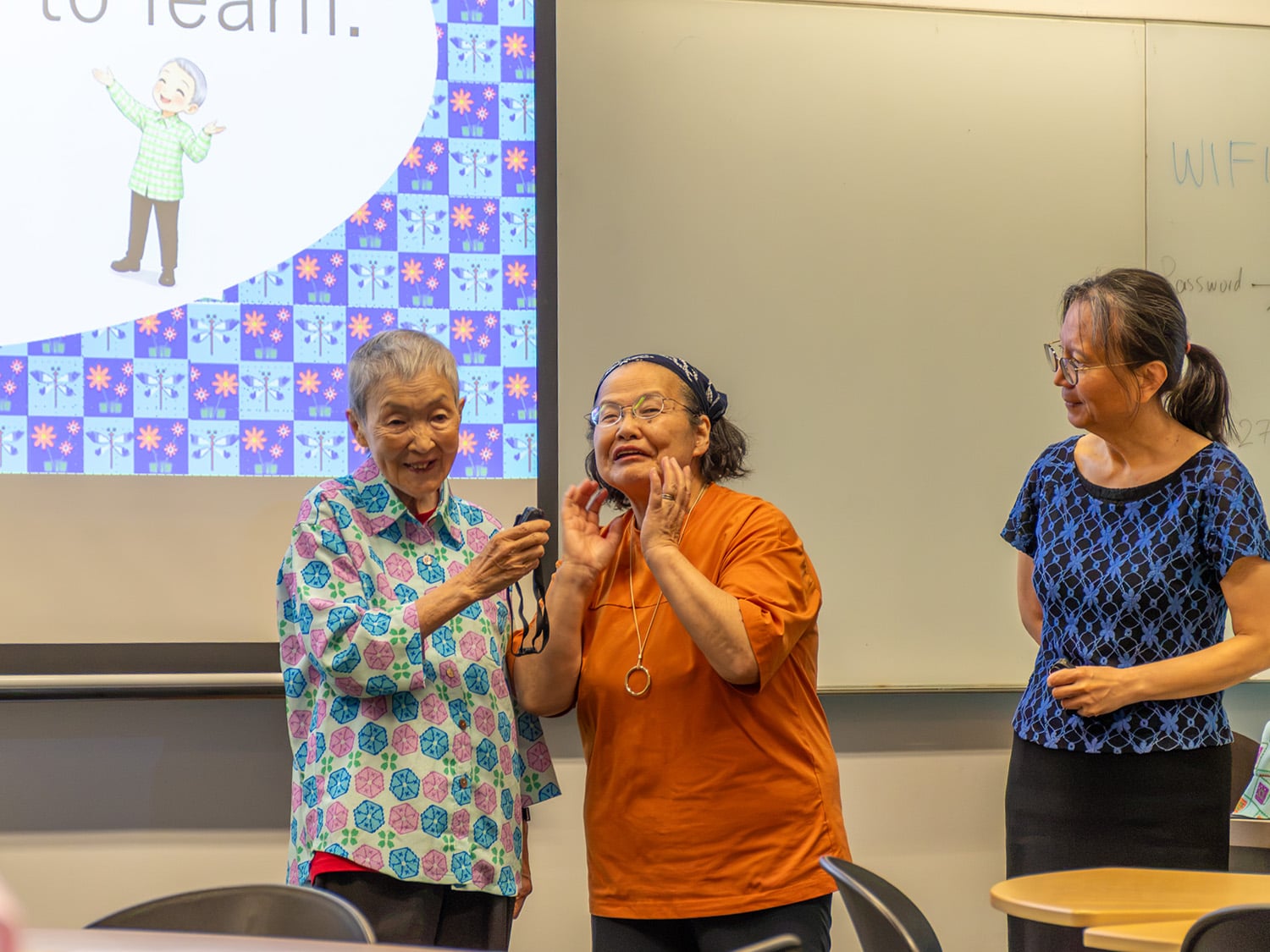
What struck us most about Ms Masako’s story was not simply what she accomplished at an older age, but her attitude towards learning. Her understanding of ikigai, a sense of purpose and meaning in life, seemed to fuel her curiosity, openness to new experiences, and willingness to persevere despite challenges.
If Ms Masako shows us what one individual can continue to become, Professor Iijima invites us to think about what we can become together.
Age-related loss of muscle mass, strength, and physical function, known as sarcopenia, is often perceived as an inevitable part of ageing. Yet Professor Iijima challenged this assumption by highlighting the importance of prevention and early intervention. He emphasised that physical function does not exist in isolation. Nutrition, physical activity, and social participation can all influence how we age.
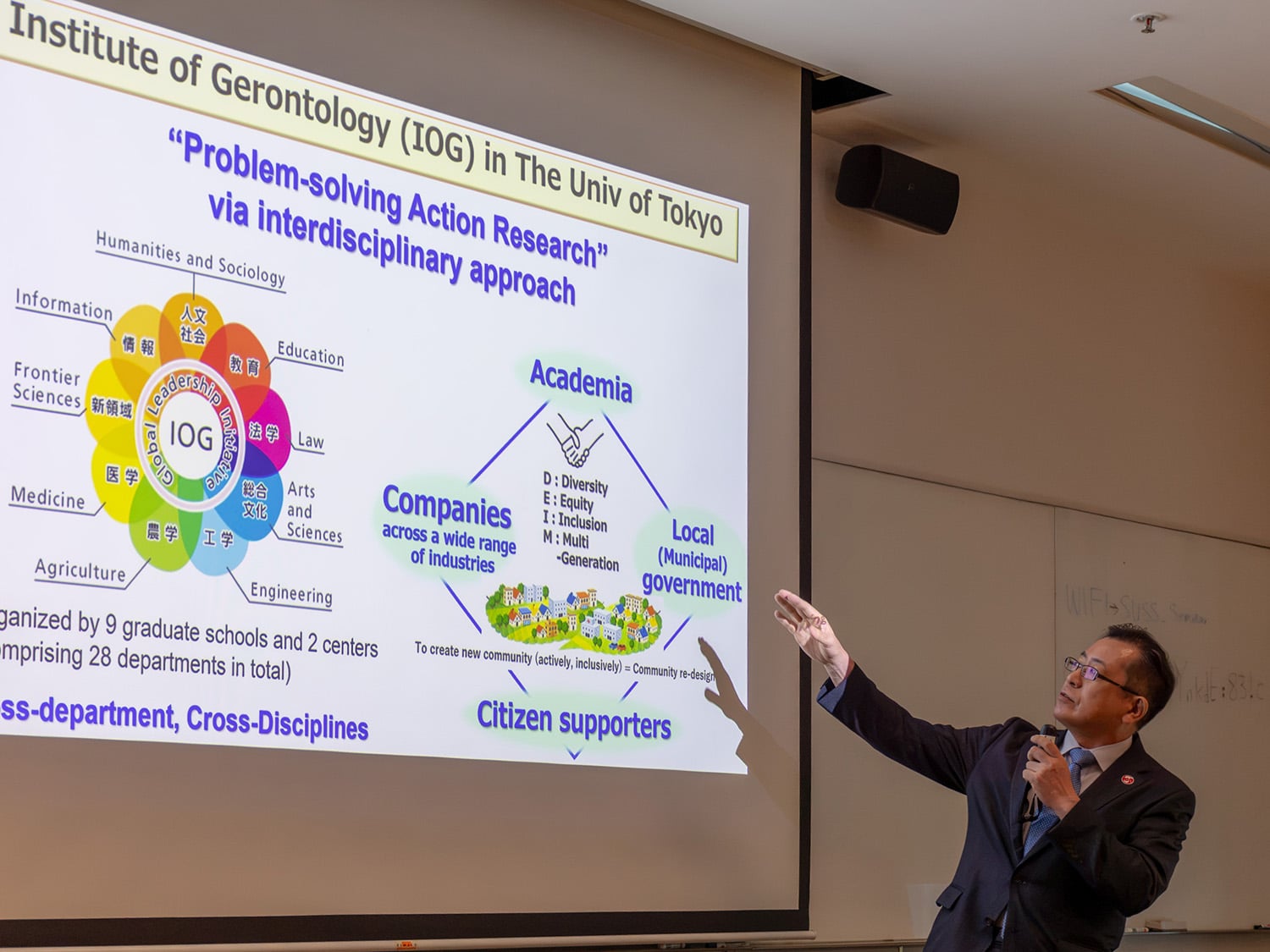
Professor Iijima’s work extends beyond individual health to examine the role of communities in preventing frailty. is community-led Frailty Check-up model demonstrates how prevention can be embedded within the community, rather than being something that takes place only within healthcare settings. As of 2026, the programme has been implemented in 106 municipalities and reaches more than 10,000 participants annually. His work reinforced a simple but powerful idea: that ageing well is not simply an individual responsibility. It is also shaped by the environments and communities that enable people to remain active connected and enagaged.
Professor Iijima shared the Trinity of frailty prevention: Nutrition, Physical Activity, and Social Participation. These three pillars remind us that living well in later life is not simply about maintaining our physical health, but also about staying connected and engaged with the people and communities around us.
He also emphasised the importance of cultivating awareness and making lifestyle changes early, rather than waiting until functional decline has already occurred. He also introduced the Yubi-wakka, (“finger-ring”) test, a simple and low-cost screening method where a person forms a ring around their calf, using their thumb and index finger. This test can help identify people who may be at greater risk of low muscle mass and frailty, encouraging earlier awareness and preventive action.
What resonated with us was the idea that prevention does not begin when we become frail. It begins much earlier, through the everyday choices we make about what we eat, how we move, and whether we remain connected to others.
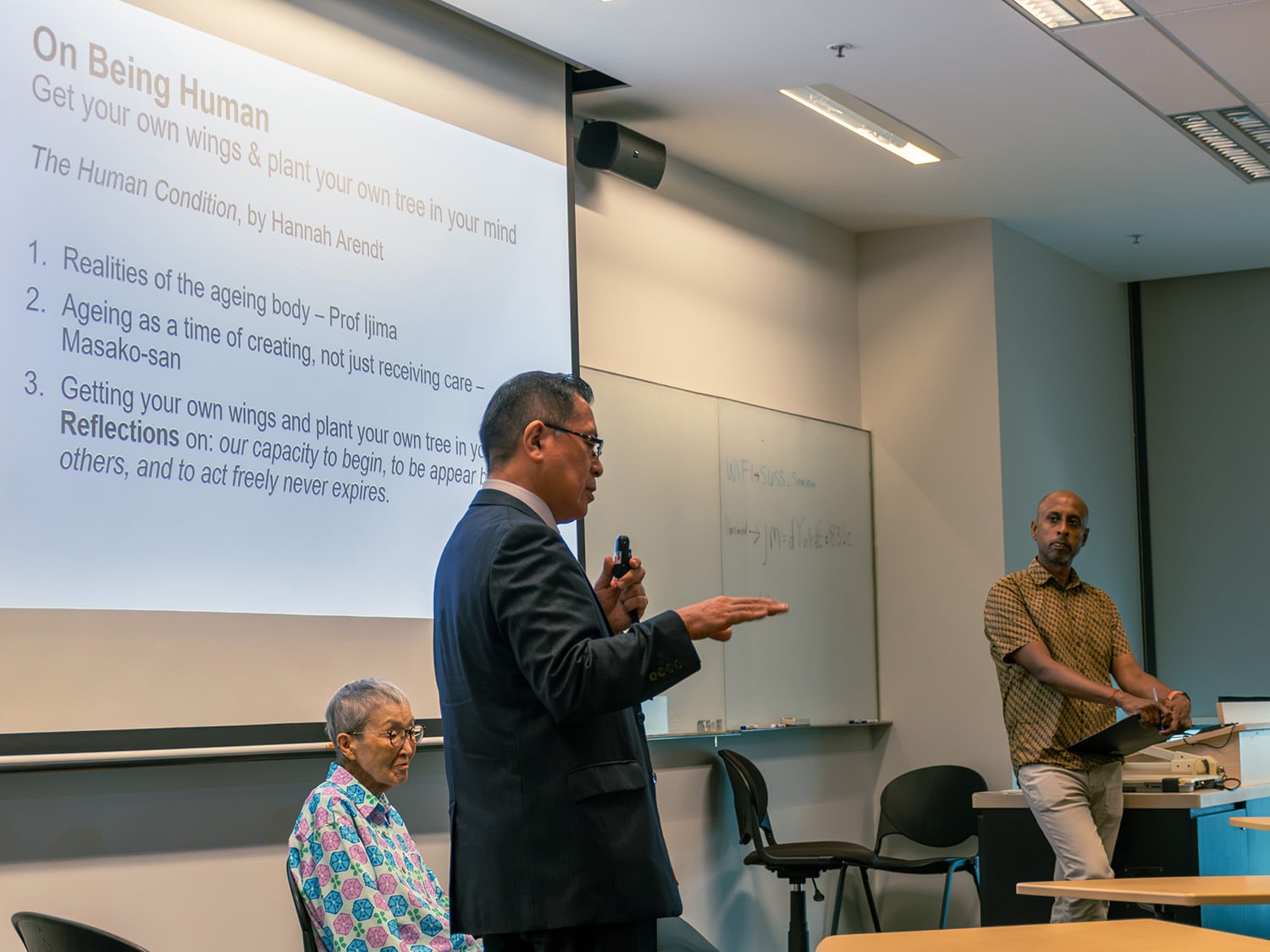
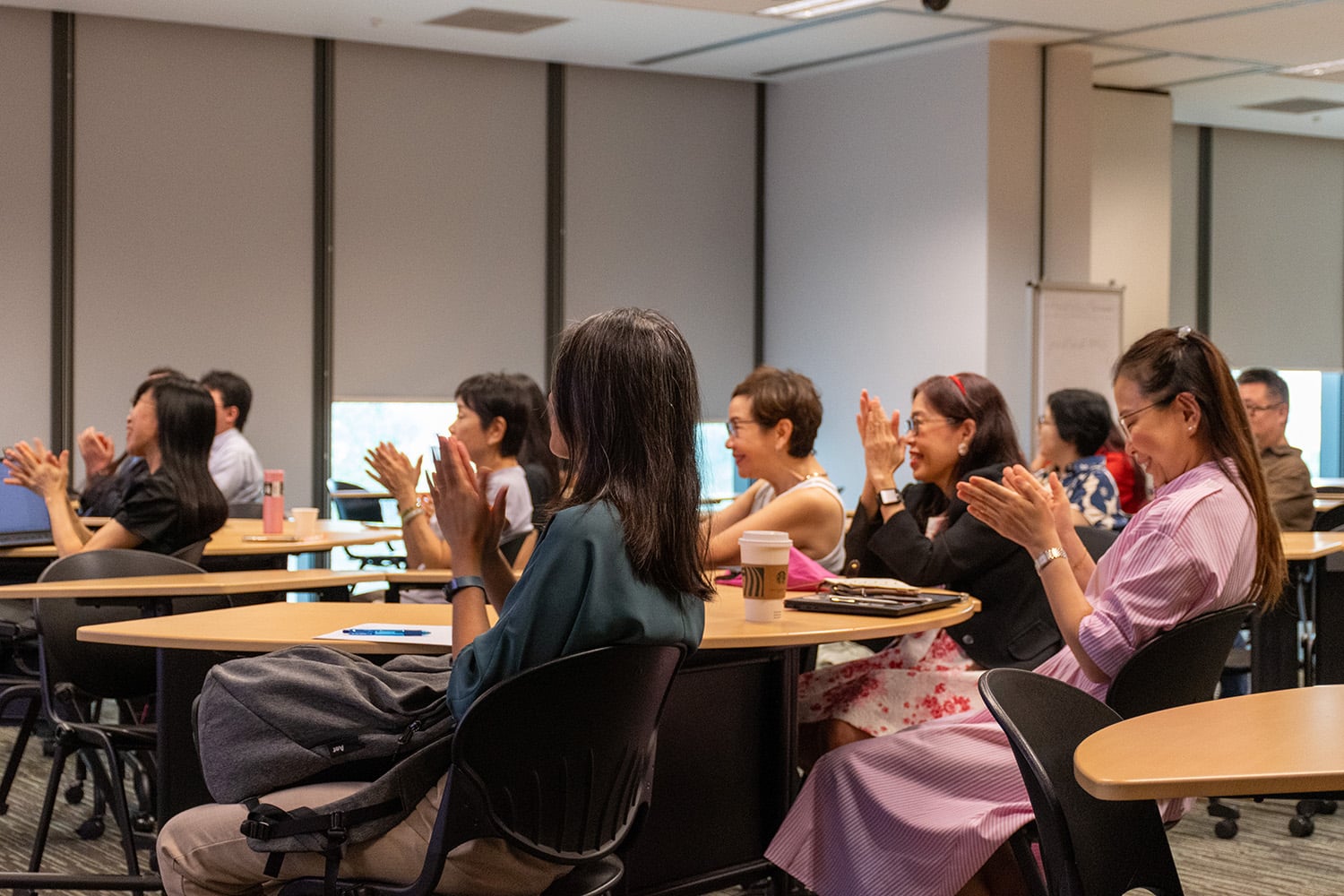
Moderated by Dr. Siva Gopal Thaiyalan, the discussion sparked considerable interest among the audience. Many of the questions reflected participants’ own experiences working with local communities, particularly the challenges of translating community-based ideas into sustainable initiatives. Discussions explored how programmes can encourage participation, reach those who may be less inclined to seek support, and remain meaningful over time.
A recurring theme was the importance of creating opportunities centred around shared interests, learning, physical activity, meaningful goals, and opportunities to contribute. In doing so, participation becomes less about receiving help and more about having a reason to show up.
The conversation also highlighted what is needed to sustain these communities.
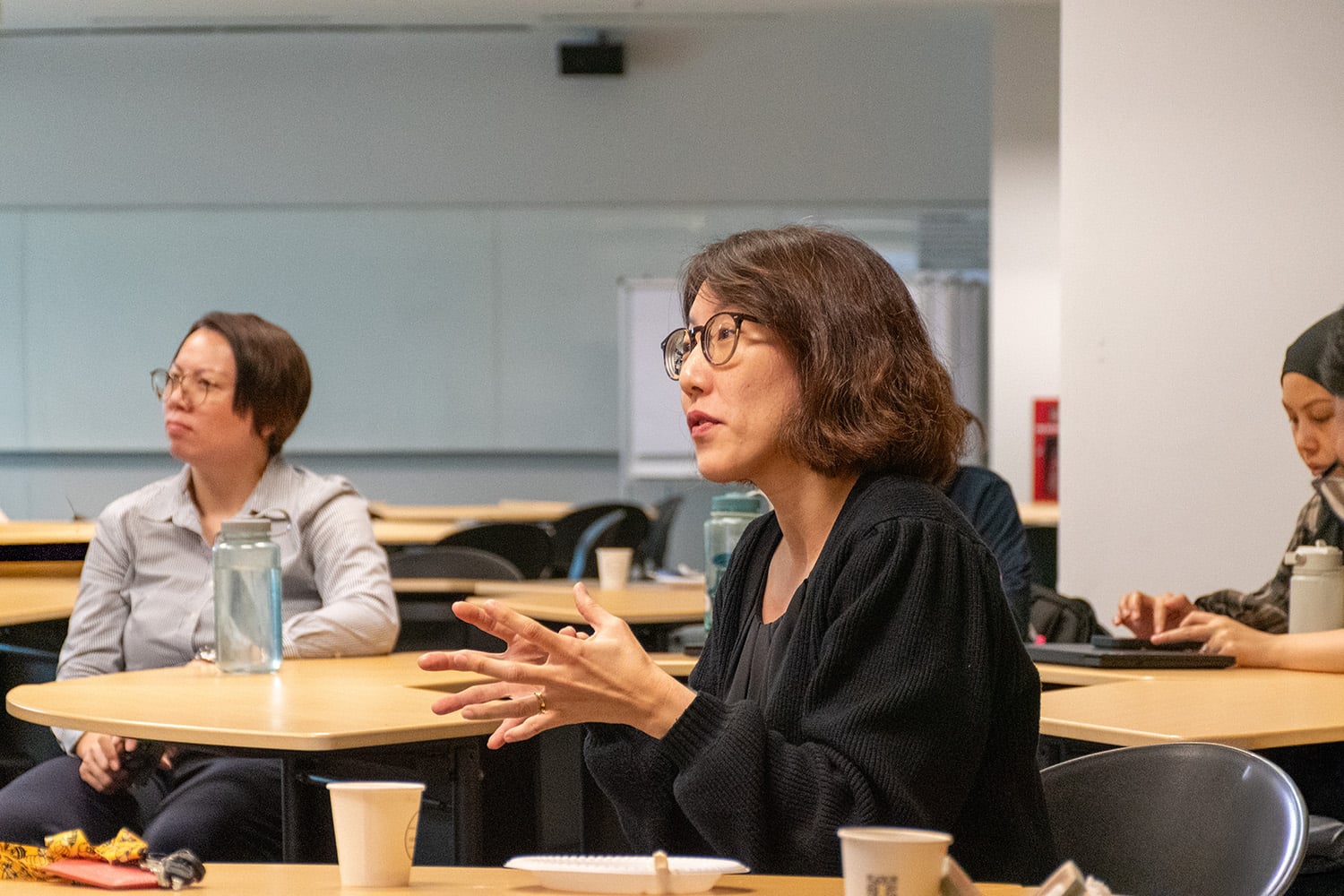
Meaningful programmes require not only participation, but also accessibility, resources, and sustainable funding. Prevention, therefore, is not solely an individual responsibility. It is also a collective effort that depends on whether we create communities create the conditions for people to age well.
Together, Ms Masako and Professor Iijima offered two complementary perspectives on ageing. One showed us the possibility of continuing to learn, create, and find purpose throughout life, while the other reminds us of the importance of building communities and environments that makes this possible.
Perhaps being human is not simply about growing older. It is about continuing to learn, create, connect, contribute, and find meaning throughout the different stages of our lives.
Perhaps the desire to become never really has an age.