Course ID: TGS-2024045546
Level: Basic
Duration: 1.5 days
Venue: Singapore University of Social Sciences
Synopsis
This course equips patient leaders with essential skills to navigate Singapore's healthcare ecosystem and contribute effectively to decision-making processes. Participants gain a comprehensive understanding of the healthcare landscape, including its financing model and stakeholder dynamics. Through theoretical exploration and practical exercises, attendees learn about health economics, drug development, and patient advocacy. The course emphasizes Singapore's approach to universal health coverage and health equity, empowering participants to drive positive change and enhance patient outcomes within the healthcare system.
Who Should Attend
Patient advocates, board members and leadership team of patient organisations who have the responsibility of strategic and work planning.
Topics
- Overview of the Healthcare Environment and Ecology
- Health Economics & Healthcare Financing in Singapore
- Drug Development, Singapore HTA and Reimbursement Process
- The Multiplicity of the Role of Patient Organisations
- From Information to Evidence
- Planning for Impact
Objectives
- To introduce to the relative newcomer the fundamentals of health economics and healthcare financing in Singapore, and how government intervention and schemes, insurance schemes and out-of-pocket expenditures, come together to create Singapore's unique healthcare financing model and its impact on healthcare access and affordability.
- To introduce to the relative newcomer Singapore's healthcare ecosystem, examining its structure, policies and stakeholders, as well as its philosophy for universal health coverage, health equity, and the role of patients and patient organisations.
- To gain awareness and understanding of the overall drug development process, including the reimbursement and health technology assessment processes.
- To gain depth in understanding of the multiplicity of the role of patient organisations;
- To gain understanding of evidence-based patient engagement in practice.
- To gain understanding of action planning (policy, media, community engagement)
A. Knowledge and Understanding (Theory Component)
By the end of this course, participants should be able to:
- Gain a comprehensive overview of the healthcare ecosystem and healthcare financing in Singapore, an understanding of drug development and health technology assessment processes, and the role of the patient advocate or patient organisation within the ecosystem.
- Learn the fundamental principles of health economics and healthcare financing, analyzes Singapore's healthcare financing model's effectiveness in achieving universal health coverage, evaluates the role of government policies in shaping healthcare financing, and discusses challenges and opportunities for improvement in Singapore's healthcare financing system.
- Understand the role of a patient advocate and patient organisations within the healthcare system.
- Understand evidence-based patient engagement.
B. Key Skills (Practical Component)
By the end of this course, you should be able to:
- Articulate the role of their patient organisation within the healthcare system.
- Use the theory of change and other frameworks to plan for impact.
Schedule
| Time | Agenda |
|---|---|
| Day 1 | |
| 09:00 - 09:30 | Course Overview |
| 09:30 – 10:30 | (1) Overview of the Healthcare Environment and Ecology (A/P Jason CH Yap) |
| 10:30 – 10:45 | Break |
| 10:45 – 12:00 | (2) Health Economics & Healthcare Financing in Singapore (A/P Jason CH Yap) |
| 12:00 – 13:00 | Lunch |
| 13:00 – 15:45 | (3) Drug Development, Singapore HTA and Reimbursement Process (A/P Alec Morton) |
| 15:45: 16:00 | Break |
| 16:00 – 16:30 | Assessment for Topics 1 to 3
|
| Day 2 | |
| 09:00 - 10:30 | (4) The Multiplicity of the Role of Patient Organisations (Dr Ritu Jain) |
| 10:30 - 10:45 | Break |
| 10:45 - 12:00 | (5) From Information to Evidence (Dr Ritu Jain) |
| 12:00 – 13:30 | (6) Planning for Impact (Dr Ritu Jain) |
| 13:30 – 14:00 | Assessment for Topics 4 to 6
|
Assessments
- Quiz/ Enhanced Matching Questions
- Group Presentation
Requirements
- Attendees must bring along their own laptop.
About the Trainer
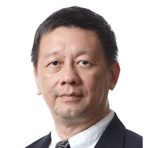 Associate Professor Jason CH Yap
A public health physician with over 35 years with diverse responsibilities in public and private healthcare, including public policy, operations, informatics, marketing and education, Jason is a practice track Associate Professor and Vice Dean (Practice) in Saw Swee Hock School of Public Health, National University of Singapore. His Practice Office facilitates the school’s translation of Public Health knowledge and skills for impact, including supporting policy formulation and programme implementation at agencies like Ministry of Health and Health Promotion Board.
He supports undergraduate, postgraduate, executive and continuing professional education at the School, and is Associate Programme Director for National University Health System’s National Preventive Medicine Residency Programme. He was Programme Director from November 2015 to December 2022.
His academic interests are in Healthcare Management, Integrated Care and Health Systems. He has taught on a wide range of topics including health policy and systems, research and evaluation, strategic planning, systems thinking, healthcare marketing and medical tourism/travel, and information security. He has been on the teaching faculty of Singapore Medical Association’s Centre for Medical Ethics & Professionalism since 2004.
He is a Fellow in the College of Public Health & Occupational Physicians and the College of Clinician Educators of the Academy of Medicine (Singapore). He serves on the Board of Directors, Medical Advisory Committee and Institutional Review Board of St Luke’s Hospital. He is Deputy Chairman of Enterprise Singapore’s Coordinating Committee for the Silver Industry, and a member of the Board of Directors of SATA CommHealth, the International Advisory Committee of the Central Coast Research Institute in Australia, and the Advisory Board for Lions Befrienders. He was on the Board of Directors of the International Foundation for Integrated Care from 2014 to 2022. In 2008, he stepped down as Commanding Officer of the SAF’s 6th Direct Support Medical Battalion.
He was Chief Knowledge Officer in the Agency for Integrated Care where he supervised knowledge management, analytics and information resources, research and evaluation, education in Public Health and Integrated Care, and the development of research and innovative technology in community care. He was also Chief Data Protection Officer (during the implementation of the Personal Data Protection Act), the Chief supervising the regional integration team for the Central Region, and Associate Programme Director for the Preventive Medicine Residency.
From 2005 to early 2009, he was Director (Healthcare Services) in the Singapore Tourism Board, where he headed international branding and marketing for Singapore Medicine, a government-industry partnership to develop and promote Singapore as an international medical hub. He expanded the global reach of Singapore’s international services for consumer and corporate medical travel, and positioned Singapore as the model healthcare destination, winning the TravelWeekly Best Medical/Wellness Destination Awards in 2007 and 2008. In 2010, he worked at Regency Specialist Hospital, a start-up hospital in Johor, Malaysia, at Raffles Medical Group as Director for Hospital Marketing, and at Singapore HealthPartners as Adviser (Business Development) on a hospitality-healthcare complex combining an acute tertiary hospital, a specialist medical centre and a luxury hotel.
From 1999 to 2005 in the National Healthcare Group, he worked first in hospital health information management and then in 2001 developed an online pharmacy, NetCare (the first comprehensive personalised patient online portal in Singapore), and the Integrated Care Information System (the national step-down care referral system), the latter two supported by an award from The Enterprise Challenge, Prime Minister’s Office. In 2002, he joined the core IT management team to consolidate NHG’s multiple IT departments, serving as director for corporate planning, quality management, finance, human resource, and security. He conceptualised NHG’s ONE Vision for IT and its proposal for the national Electronic Medical Record eXchange (EMRx) for public sector patient data sharing. At Tan Tock Seng Hospital as a clinical epidemiologist during the SARS outbreak in 2003, he led the development of SARSWeb, a patient contact information exchange platform for the Ministry of Health, public and private healthcare providers.
Prior to this, he had a broad range of experience in the Ministry of Health, including stints in medical manpower planning, medical audit and accreditation (during the implementation of the Private Hospitals & Medical Clinics Act), support services, research and technology assessment, hospital operations in the then Woodbridge Hospital, national health information policy, and as Press Secretary to the Health Minister. He graduated with an MBBS in 1987 and a Master of Medicine (Public Health) in 1992. He also obtained a Master of Business Administration (Information Systems) in 1994 and a Master of Christian Studies (Spiritual Theology) in 2019. He completed the Certificate in Integrated Care (International Foundation for Integrated Care) in 2021 and the Certificate in Health Economics & Policy (London School of Economics & Political Science) in 2023.
 Professor Alec MORTON
“The only purposeful way that one can influence the future is by making decisions.” (Ralph Keeney)
Alec is a multidisciplinary scientist who has worked, to date, in schools of engineering, social science, business, and public health. His overriding professional interest is in how to support decision makers in health services, public health and social policy to make wise decisions which are based on facts, evidence and knowledge, and aligned to social values. He is an author of the WHO working paper What counts in economic evaluations in health?
Concurrently with his appointment at NUS, Alec is Professor of Management Science at the University of Strathclyde in Glasgow, Scotland. During a sabbatical in 2022, he was based at HITAP at the Ministry of Public Health of Thailand. He is a Fellow of the Royal Society of Public Health and Departmental Editor of Healthcare Management Science.
 Dr Ritu Jain
Dr Ritu Jain is the current President of Dystropic Epidermolysis Bullosa Research Association (DEBRA) International, an Epidermolysis Bullosa (EB) patient advocacy and support organisation, as well as its Singapore chapter which she co-founded in 2015. She is also the co-chair of Singapore’s HTA consumer panel, Agency for Consumer Effectiveness. Ritu serves in various capacities on the boards of various regional and global advocacy organisations such as Vice-President of Globalskin, the International Alliance of Dermatological Patient Associations, the Asia Pacific Alliance of Rare Disease Organisations (APARDO), Rare Diseases International (RDI) and the International Rare Diseases Research Consortium (IRDiRC). In her various roles, Ritu focuses on empowering patients and families, organising local and regional conferences for capacity building and improved delivery of care, and advocating for policy changes. Ritu’s familiarity with the culture, conditions, and challenges of those with rare diseases in Asia makes her a valuable voice within rare diseases ecosystem. Beyond these volunteer roles, Ritu is a communication specialist and Assistant Chair at the School of Humanities, Nanyang Technological University, Singapore.
Application Procedures
Please submit the following documents to [email protected]:
- Coloured copy (back and front) of NRIC for Singaporeans and PRs, or "Employment"/"S"
Pass for foreign applicant
- Application form
Course Fee
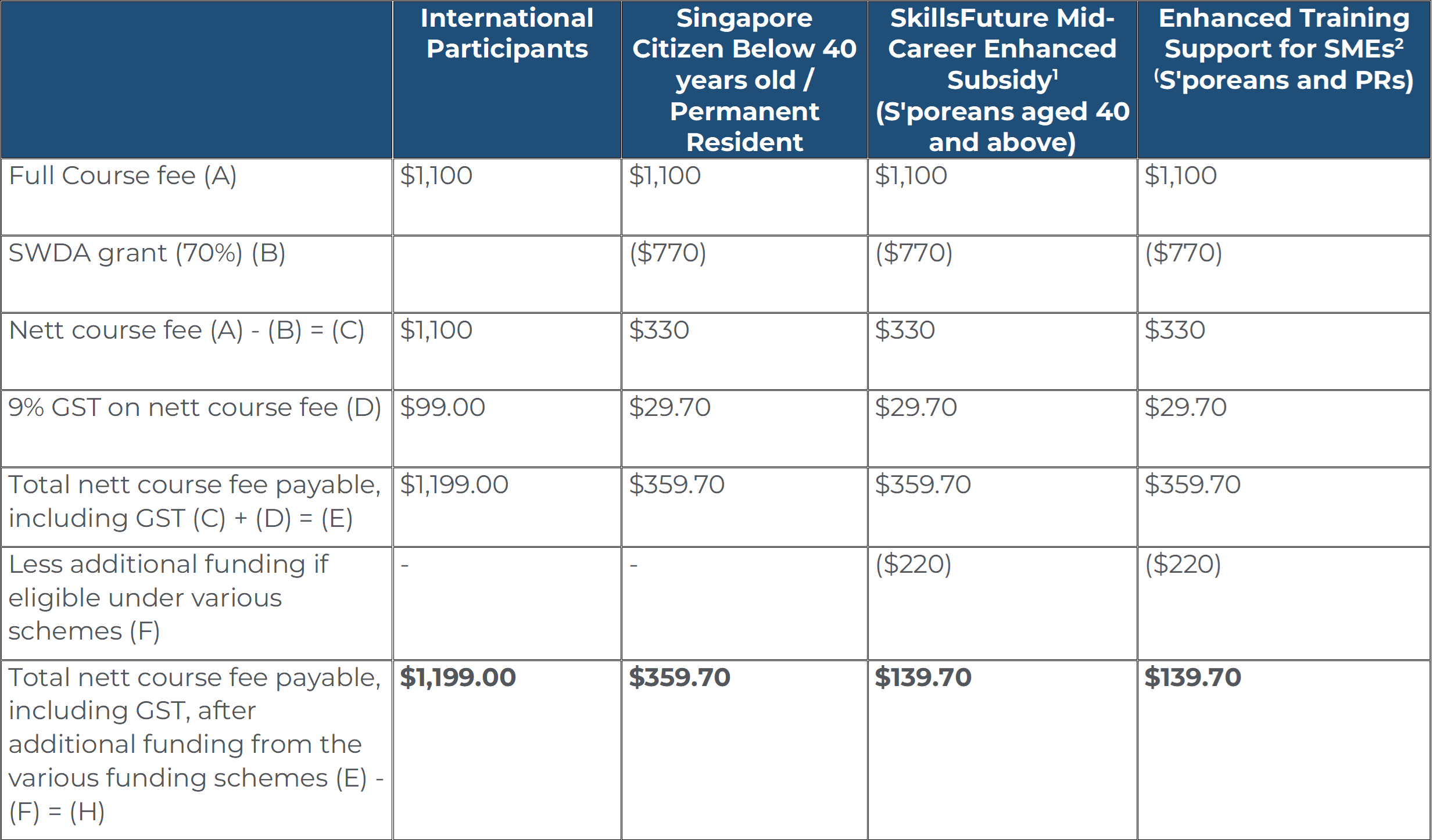
1 Mid-Career Enhanced Subsidy:
Singaporeans aged 40 and above may enjoy subsidies up to 90% of the course
fees.
2 Enhanced Training Support
for SMEs: SME-sponsored employees (Singaporean Citizens and PRs) aged 21
and above may enjoy subsidies up to 90% of the course fees.
- Participants are required to achieve at least 75% attendance and pass any prescribed examinations/assessments or submit any course/project work (if any) under the course requirement.
- Participants are required to complete all surveys and feedbacks related to the course.
- The course fees are reviewed annually and may be revised. The University reserves the right to adjust the course fees without prior notice.
- Singapore University of Social Sciences reserves the right to amend and/or revise the above schedule without prior notice.
For the various payment modes, please refer here.
Course Withdrawal and Refund
Request for withdrawal from a course must be submitted to SUSS Academy formally in writing.
- Course Withdrawal before Application Close Date: No charges.
- Course Withdrawal after course confirmation: 50% of the full course fee with an administration fee imposed.
- Course Withdrawal after the course commences: Full course fee applies.
For clarification, please contact the SUSS Academy via the following:
Telephone: +65 6330 9110
Email: [email protected]