Duration: 4 days
Dates: 27 to 30 October 2026
Level: Advanced
Venue: Singapore University of Social Sciences
Synopsis
This course focuses on the application of practical counseling skills and techniques
with families using the Structural Family Therapy Model. Participants will learn
the theoretical concepts and framework of the Structural Family Therapy model developed
by Salvador Minuchin and colleagues. Participants will analyse the Structural Family
Therapy model to determine how best the model can be used to guide their approach
to working with families. Participants will also learn clinical practice issues
central to a systemic approach to family counselling through case studies and video segments of family
interviews. This course encourages participants to draw on their previous experiences
and apply the course materials into practiced skills through role-plays.
Who Should Attend
This programme is for professionals, both counsellors and social workers, as
well as individuals embarking on career switch into the social service sectors seeking
to enhance the effectiveness of their therapeutic works with couples and families.
Topics
- Background of Salvador Minuchin
- Evolution of Structural Family Therapy
- Basic concepts in Structural Family Therapy
- Advantages and disadvantages of Structural Family Therapy
- Assessing Families: From Linearity to Systems
- Treatment goals and assumptions
- The Therapist Role and Stance
- Step One: Opening up the presenting problem
- Step Two: Establishing the problem maintenance
- Step Three: Structured focus on family history
- Step Four: Exploring alternative ways of relating
Learning Outcomes
- Examine the philosophical and theoretical concepts underpinning the Four-step Model
- Appraise the processes involved in the Four-step Model in a given clinical case/ setting
- Organise the Four-step Model and the craft of family therapy into the therapist's clinical practice
- Demonstrate how to surface the presenting problem, and highlight the problem-maintaining patterns
- Develop skills in focusing on exploration of the past
- Apply the clinical skills in exploring alternative ways of relating
in the family interactions
Objective
A. Knowledge and Understanding (Theory Component)
By the end of this course, you should be able to:
- Discuss the philosophical and theoretical concepts of the Four-step Model
- Evaluate the therapist's role in Structural Family Therapy
- Appraise the processes involved in the Four-step Model
B. Key Skills (Practical Component)
By the end of this course, you should be able to:
- Demonstrate how to surface the presenting problem
- Highlight the problem-maintaining patterns
- Formulate structural hypothesis
- Develop skills in focusing on exploration of the past
- Apply the clinical skills in exploring alternative ways of relating in the
family interactions
Schedule
| Time | Agenda |
|---|---|
| Day 1 | |
| 09:00 - 09:30 | Class introduction, expectations, assessment, and overview |
| 09:30 - 10:15 | Participants’ ways to go about therapy |
| 10:15 - 10:30 | Break |
| 10:30 - 11:15 | The craft of family therapy History and development of SFT |
| 11:15 - 12:30 | Applying SFT to family development |
| 12:30 - 13:30 | Lunch |
| 13:30 - 14:15 | Core concepts of SFT |
| 14:15 - 15:30 | Structural and other models |
| 15:30 - 15:45 | Break |
| 15:45 - 16:30 | Discussion: What makes therapy work and what common challenges faced in family interventions (including Participants’ own case) |
| 16:30 - 17:30 | Quiz and discussion on the answers 4-Step model: Systemic insights behind the model |
| Day 2 | |
| 09:00 - 09:30 | Therapist Function and Stance |
| 09:30 - 10:30 | Joining Techniques (case vignette) |
| 10:30 - 10:45 | Break |
| 10:45 - 12:30 | Close Positioning |
| 12:30 - 13:30 | Lunch |
| 13:30 - 14:30 | Broadening presenting problems from family systems lens Case Study: Problem presentation leading to structural formulation |
| 14:30 - 15:30 | Skill practice 2: Reframing, Use of Self, communicating the structural formulation |
| 15:30 - 15:45 | Break |
| 15:45 - 17:00 | Enactment process Skill practice 3: Facilitating enactment to identify dysfunctional patterns Conceptualizing / hypothesis around family dynamics (including family mapping on family subsystem) |
| 17:00 - 17:30 | Defining treatment goals in SFT Quiz and discussion on the answers |
| Day 3 | |
| 09:00 - 09:30 | How do family members develop certain perspectives and behaviours in their relationship pattern? |
| 09:30 - 10:30 | Video: Explore the past |
| 10:30 - 10:45 | Break |
| 10:45 - 12:30 | Discussion: modifying interactions, boundary making, intensity, shaping competence, unbalancing |
| 12:30 - 13:30 | Lunch |
| 13:30 - 14:30 | Skill practice 4a (Exploring the Past to unbalancing and restructuring) – Group assessment segment (50%) |
| 14:30 - 15:00 | Debrief |
| 15:00 - 15:15 | Break |
| 15:15 - 16:15 | Skill practice 4b (Exploring the Past to unbalancing and restructuring) – Group assessment segment |
| 16:15 - 17:30 | Debrief on 4-Step model |
| Day 4 | |
| 09:00 - 10:30 | Recap on SFT core concepts |
| 10:30 - 10:45 | Break |
| 10:45 -12:45 | Case study assessment (50%) |
| 12:45 - 13:45 | Lunch |
| 13:45 - 15:30 | Participant case discussion on use of SFT |
| 15:30 - 15:45 | Break |
| 15:45 - 16:30 | Putting together Step 1 to 4, live demo with role rotation |
| 16:30 - 17:30 | Closing |
Assessments
- Case Presentation (2 hours)
The first segment is to assess the Learner's understanding and ability to accurately apply conceptually the framework of the Structural Model to a case. A case study will be given for all Learners to do an in-class exercise of it. A total of 50% or 50 marks of the total mark will be allocated to this segment. - Skills Demonstration (1 hour)
The second segment will focus on the Learner's ability to demonstrate skills in engaging a family using skills generic to working systemically and specifically, to apply skills specific to the Structural Model of Family Therapy, for example skills at obtaining an enactment or unbalancing a family. This segment will be conducted using role plays and each Learner will be peer reviewed based on a set prescribed feedback sheet. Each Role Play will see each Learner in the role as the Family Counsellor. A total of 50% or 50 marks of the total mark will be allocated to this segment.
Requirements
- Degree in counselling, and at least 1 year experience in counselling and currently doing counselling work
- Degree in related fields (psychology, social work and education), completed the 5 foundational modules, at least 3 year experience in counselling and currently doing counselling work at an SSA
- Master in Psychology or Master in Social Work, at least 3 year experience
in counselling and currently doing counselling work at an SSA and completed
the foundational module Practicum: Specialised Counselling Skills
About the Trainer
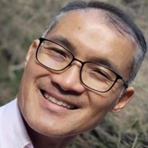 Mr Wilson Mack
Mr Mack is a practitioner in Social Work and Counseling for many years. He has received advanced training in Family & Couple Therapy and has been involved in action research and clinical supervision. He has recently published journal articles in the area of elder abuse and children from acrimoniously divorced families. He also teaches Family Therapy with SUSS. He is interested in deepening practitioners’ perspectives and skills in working with families.
Application Procedures
Please submit the following documents to [email protected]:
- Coloured copy (back and front) of NRIC for Singaporeans and PRs, or "Employment"/"S"
Pass for foreign applicant
- Application form
Course Fee

1 Mid-Career Enhanced Subsidy:
Singaporeans aged 40 and above may enjoy subsidies up to 90% of the course
fees.
2 Enhanced Training Support
for SMEs: SME-sponsored employees (Singaporean Citizens and PRs) aged 21
and above may enjoy subsidies up to 90% of the course fees.
- Participants are required to achieve at least 75% attendance and pass any prescribed examinations/assessments or submit any course/project work (if any) under the course requirement.
- Participants are required to complete all surveys and feedbacks related to the course
- The course fees are reviewed annually and may be revised. The University reserves the right to adjust the course fees without prior notice.
- Singapore University of Social Sciences reserves the right to amend and/or revise the above schedule without prior notice
For the various payment modes, please refer here.
Course Withdrawal and Refund
Request for withdrawal from a course must be submitted to SUSS Academy formally in writing.
- Course Withdrawal before Application Close Date: No charges.
- Course Withdrawal after course confirmation: 50% of the full course fee with an administration fee imposed.
- Course Withdrawal after the course commences: Full course fee applies.
For clarification, please contact the SUSS Academy via the following:
Telephone: +65 6330 9110
Email: [email protected]