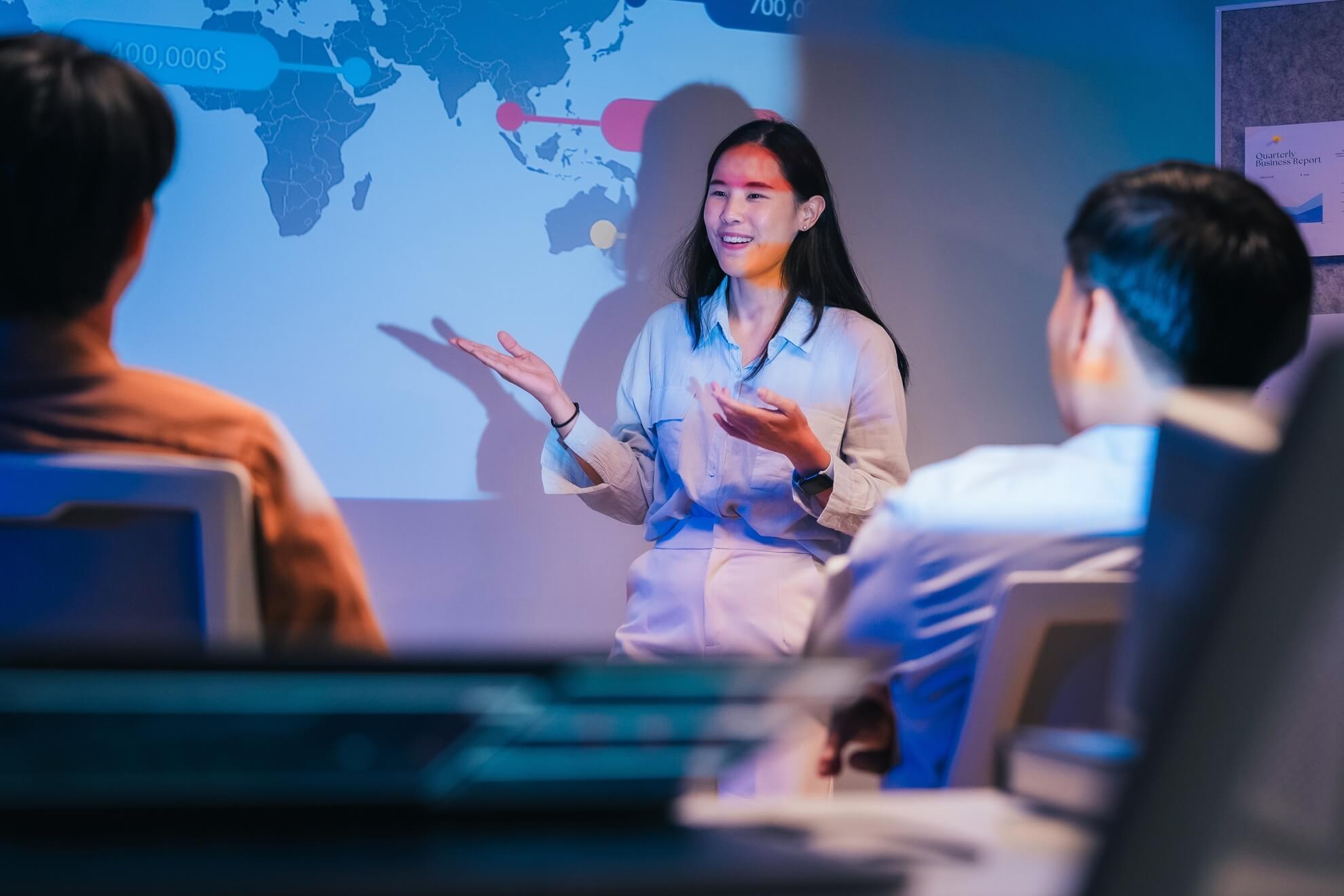
In the not-so-distant future, a graduate’s first boss may not be human.
A marketing team may count AI agents among its colleagues. A social worker might intervene before a crisis happens, guided by predictive systems trained on patterns no individual practitioner could observe alone.
Sounds like science fiction? Perhaps.
Then again, so did many of today’s technologies not too long ago. What sounds improbable today can become ordinary sooner than we think.
This is often described as the “future of work”, yet the phrase suggests disruption is still some distance away. For Mr Jason Chiam, Head of the Master of Human Capital Management Programme at the S R Nathan School of Human Development, that future has already arrived.
The real question is: can we adapt quickly enough?
The question sits close to Mr Chiam’s work in human capital and organisational change. One trend he has observed is how quickly knowledge becomes outdated. “The competitive advantage is no longer what someone knows today, but how quickly they can learn tomorrow,” he says.
When the Certificate Is Only the Starting Point
When work changes, our first instinct is often to acquire another qualification. The instinct is understandable. Qualifications still matter. They signal knowledge, discipline, and professional capability.
But Mr Chiam cautions against seeing them as proof of future readiness.
One misconception he sees is that staying relevant means accumulating more technical skills or qualifications. “Certificates record what a person knew at a point in time. They say little about how fast that person can learn the next thing,” he says.
Employers are beginning to look for that capacity too.
“Qualifications remain important, but employers are placing greater emphasis on learning agility, curiosity, and an individual’s willingness to acquire new capabilities,” he says.
That shift reflects a more uncomfortable reality: knowledge and technical skills now have a shorter shelf life. As Mr Chiam often reminds his students, “Graduation is not the end of learning. In many ways, it is only the beginning.”
When the Work Changes Before the Job Does
Another misconception is that disruption happens only when an entire job disappears.
In Mr Chiam’s experience, it often reaches the work itself first. “A common belief is that disruption will happen to other people’s jobs. In practice, it reaches the tasks inside a job long before it reaches the job title.”
That makes disruption harder to recognise. A job title may stay the same even as the work inside it quietly changes. New tools can change not just what work gets done, but how it gets done.
Covid-19 offered a powerful example.
“Many educators pivoted to teaching on Zoom because we experimented and adapted quickly, even though we were not technology experts.”
For Mr Chiam, that period showed that people can learn their way through change before they feel fully ready. In fast-moving workplaces, readiness may not come before action. That is what makes learning speed so important.
Preparing for Careers We Cannot Predict
If learning speed is becoming a competitive advantage, education has a role to play too.
“Universities must prepare learners for lifelong careers, not just first employment.”
Yet no university can anticipate every job, tool, or challenge learners will encounter. Some may not even exist yet. What universities can do is create opportunities for students to practise operating without certainty.
Theory remains essential. But Mr Chiam sees its value more clearly when learners test it against reality through industry projects, overseas experiences, community engagement and complex real-world settings.
In his own teaching, students encounter situations where different perspectives cannot be neatly resolved through theory alone. They must question assumptions, listen carefully, and decide how to respond without a model answer.
“These experiences help learners become comfortable working with ambiguity rather than expecting textbook answers.”
That kind of practice matters when the next problem does not resemble the last one. The future of work may reward people who can make sense of unfamiliar situations and still move forward.
Employers Have a Role Too
What happens after graduation matters too.
“Preparing people for the future of work cannot be the responsibility of universities alone. Employers also need to rethink how they recruit, develop, and reward talent.”
For Mr Chiam, organisations need to look beyond qualifications and past experience as the only indicators of potential. Capabilities such as problem-solving, learning agility, collaboration, and resilience are becoming increasingly important.
He also raises a practical question: how often are these capabilities actually measured when organisations hire or promote people? The same applies after hiring.
Organisations that value adaptability need to make space for experimentation, continuous learning, and growth. “A manager’s role is no longer simply to supervise work but to create environments where learning becomes part of everyday work. The best managers today are those who continue learning alongside their teams.”
For Mr Chiam, learning cannot remain an occasional course or a line in a development plan. It must become part of how work is managed, recognised, and rewarded.
The Real Advantage Is Learning Speed
Seen this way, adapting to the future of work does not have to mean constant reinvention. It may begin with learning an unfamiliar tool, seeking out different perspectives, or becoming comfortable admitting that we do not yet have the answer.
Sometimes, it simply means saying, “I don’t know yet, but I will find out.”
There may be no blueprint for the job of the future. Some of those jobs may not even have names yet. The graduates entering workplaces with AI colleagues and AI-assisted decisions will not necessarily be those who predicted those changes. They will be those who learnt how to keep learning.
“Degrees may open the first door, but it is learning agility, resilience, and the courage to embrace change that keep every subsequent door open.”
Jason Chiam is the Head of the Master of Human Capital Management Programme at the S R Nathan School of Human Development, Singapore University of Social Sciences (SUSS). His research interests include change management, employee benefits and relations, and comparative studies on housing and social issues between China and Hong Kong.
You Might be Interested
Before SUSS alumna Ms Lee Zi Xuan became a social worker helping others reclaim hope and dignity, two lecturers helped her see the possibilities she could not yet see.
A robot can monitor vitals, deliver medication, keep someone company — and never get tired. So why do so many people still hesitate to trust it with someone they love?

In her mid-40s, a friend of Dr Charissa Tan's was retrenched twice while working in banking and finance.
Subscribe to UNBOUND
UNBOUND brings together stories that don’t follow a single path – shaped by real-world challenges, lived experience, and the ideas that emerge along the way. From research to community impact, these are the stories behind SUSS.
Keep up-to-date by subscribing to our monthly LinkedIn newsletter.
Subscribe on LinkedIn